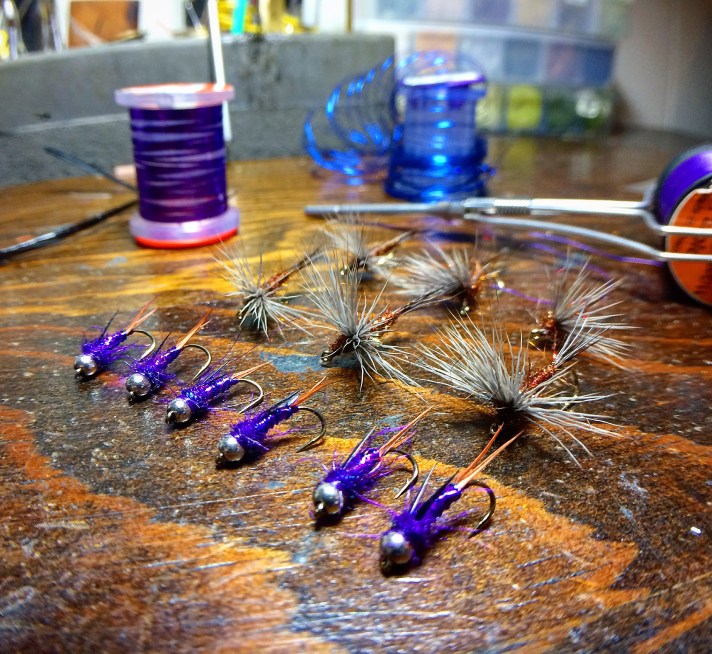
 Fishing has been pretty good this past week. We’ve had a good window of as good as it gets spring conditions. We shall see how long they hold but it looks like I will be sitting at the vise quite a bit this next week. Looks like Wednesday this coming week the river is going to rise. If it will be enough to blow out is anyone’s guess right now. We just have to wait and see. It is going to get really warm this coming week. And that 107% snow pack has to go somewhere.
So when things get funky out there and it becomes to difficult to effectively guide…I effectively use my time to tie flies for when the river is back in shape. I have always tied my own flies. I started tying the lures before I even touched a fly rod. As a gear fisherman I always loved lures and the different techniques and types. So when I learned that fly fishing you got to design and tie your own and try to mimic the natural world…I was like…sign me up that shit sounds dope. I got a kit and started reading and learning. Before youtube videos. I started buying materials, learning the different uses. Took a class, learned more, experimented, practiced, got better, then started catching fish on my stuff. When I started working the industry my tying chops really came into their own. I started tying dozens a day. I started selling them. I soon realized that it is way cheaper to tie your own then buy. So I would buy 2 or 3 of the patterns that struck my fancy and I would deconstruct one…and keep the other two for comparisons. I got really good at tying what was in the bins and catalogues. Even to the point where I would fill the bins with my ties.
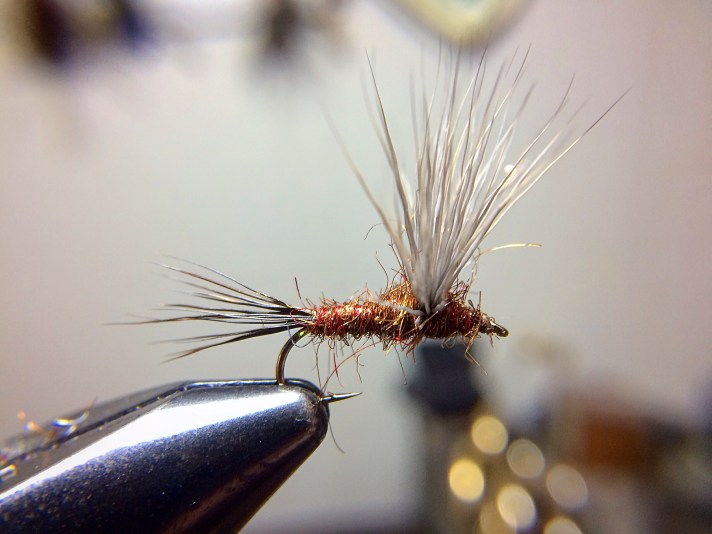 I started teaching classes. Fine tuning my skills through teaching, large scale tying, and experimenting with different patterns for multiple species. I didn’t live close to the river so I would also tie bass and carp flies. I would take notes on the flies I tied, how they held up, how they looked in the water. I made one of those fly tanks with the water and the stream flow thing, I made it out of an old fish tank. Tested everything in it. Put a mirror in the bottom so I could see what the profile of the fly looked like to the fish. Brought bugs home and put them in the tank with the flies and studied them. I totally immersed myself in it. Entomology is super cool when you are a big science nerd like me. I was obsessed with tying perfect flies and perfectly mimicking naturals. I got really good at it, have some patterns that just work, because of it. But my mentor reminded me about the three things that trout need when it comes to a fly. Size, Silhouette, Color.
The fly doesn’t have to perfectly match, it has to perfectly mimic. There is a difference. Size plays a huge role both above and below, the water changes the way things look, and trout have eyes designed to see in a liquid world…unlike ours. Trout also see color…but not the same way we do. And light through the water column changes the way trout see color and light which can be very important when selecting flies. Trout don’t see bugs the way we do…their eyes are not as advanced as ours, but they see shapes and interpret minuscule things like dimples in the meniscus that we can’t, and this is handy to know when tying flies. So I started studying the attractor patterns, how light and water affect materials. How trout interpret their environment, raided the biology section of my college library for anything I could find on stream habitat, trout, invertebrate life, found a lot. Also found Lafontaine and his Caddisflies book…in the Biology Section…just FYI.
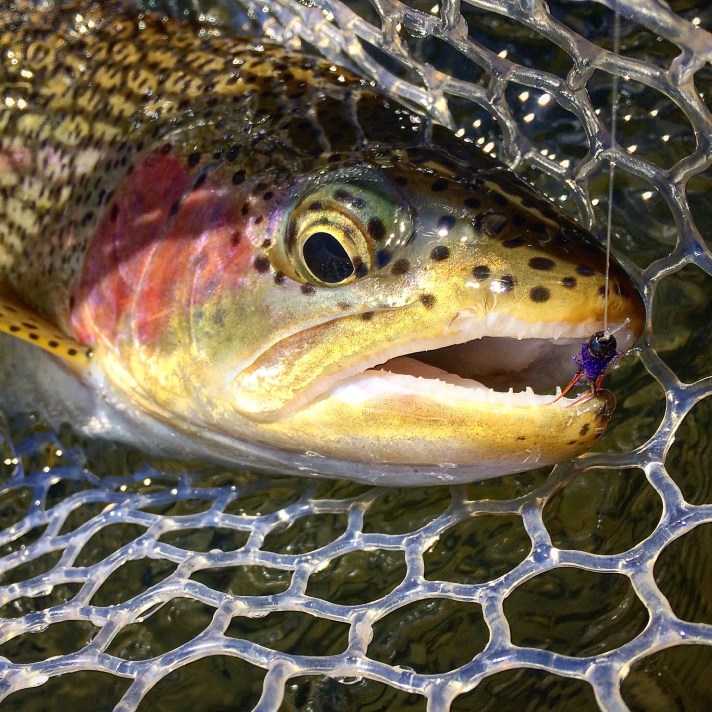 My world exploded. I really started to find my kind of sweet spot with tying. Your flies start looking like they are yours….not like all the other ones…versions of the other ones…your versions…and they work….sometimes better. I tie because I believe that trout eat things they don’t see on a regular basis. I have seen so many trout refuse store bought flies…those picky trout…the ones you hear about but can’t seem to get yourself…well…that fly that everyone is throwing at them…could be the reason. You won’t find that stuff in my box. Sure I’ve got a few store bought…mostly because I still buy a few that strike my fancy and then tie more to look like them. I love when clients can’t tell the difference between the two…except mine will hold up to more trout typically.
I tie for myself because I still love the sensation of tying a fly at the vise, tying the fly onto the tippet, my heart racing as it drifts over the spot where I last saw the fish rise….that moment…when you ask yourself if your fly is worthy….and the trout answers. That feeling, to this day, whether the rod is in my hand, the hand of my clients, or my children…after 12 years of chasin’ trout….I still cannot get enough of that rush…that flutter of the heart. The shot of adrenaline as the fish and you meet through the rod bend. The head shake, the run, the jump, the whole time smiling inside and out with the satisfaction that something I created was the key into that world of wild trout. Damn fly fishing is cool. For me it all started with the flies. The fly is the most important part, how it looks, how it drifts, how the fish interprets it all. It is the key to the door, it is what sets fly fishing apart from all other angling forms…that fly and what is required to unlock those river secrets….mmm…ya fly fishing is really cool.
See ya out there anglers.
Tamarack
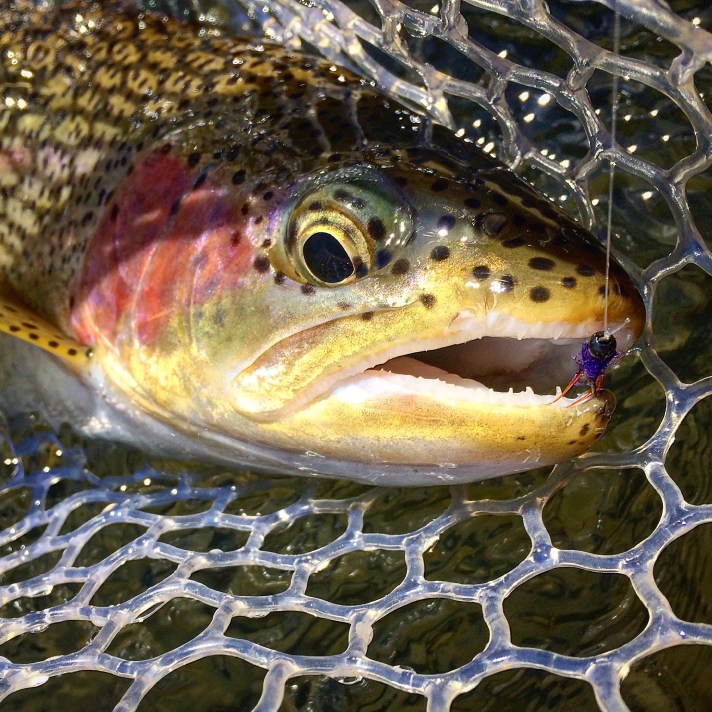
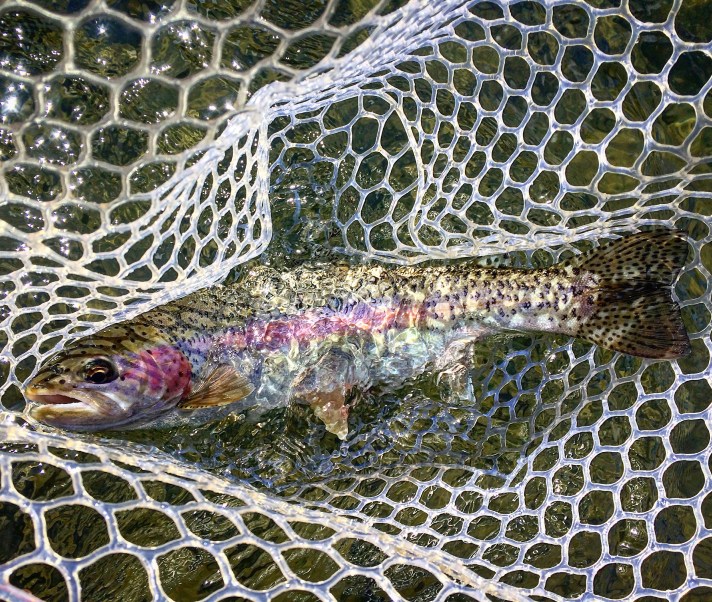
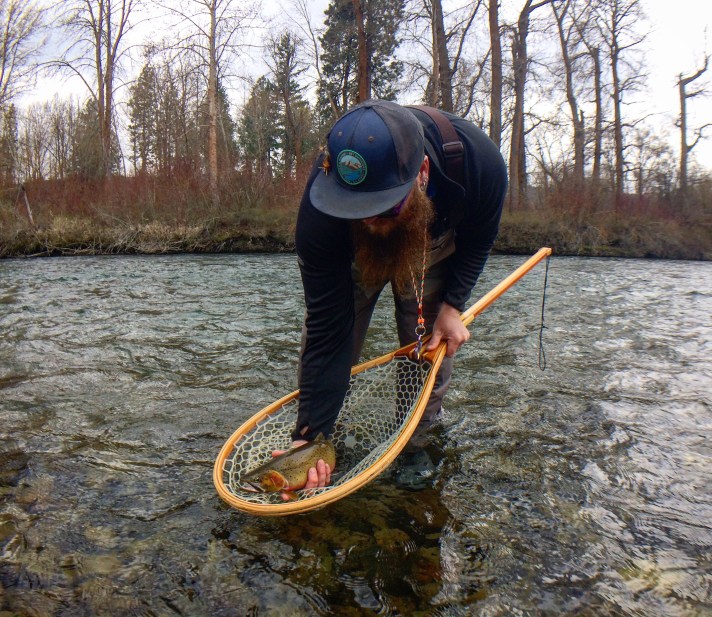
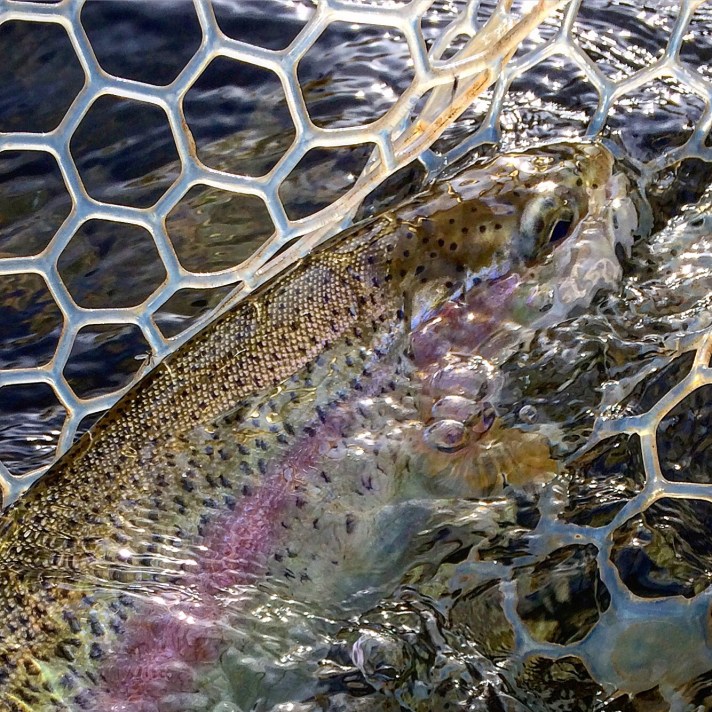
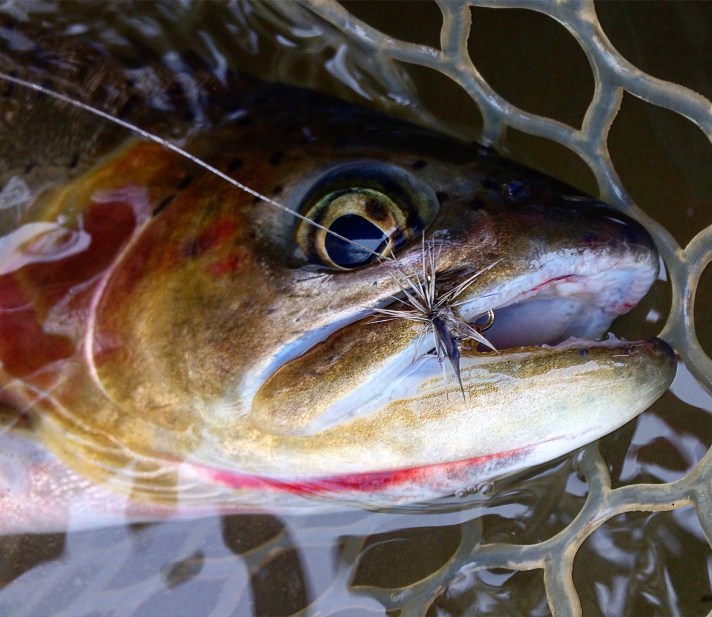
 The Yakima is in good shape this week and the March Browns, BWO’s, and some drakes are starting to hatch in the afternoon and fish are starting to look up on a regular basis.
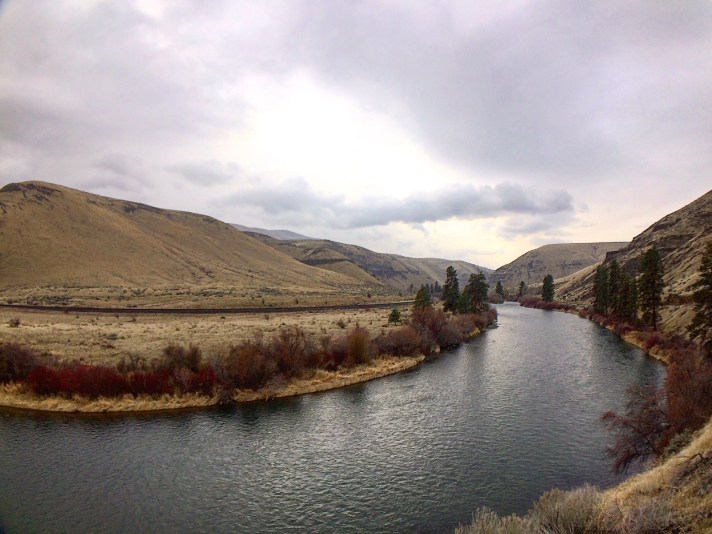 Every season clients ask me how many big fish we catch a year. I tell it straight and as many know, we measure a lot of the bigger trout we land when conditions allow. I’ve got that ruler on the deck of the boat for a reason. In the past 3 seasons I have seen 4-8 actual 20 inch fish landed in my boat out of this system. Almost every single one has been caught between February and Memorial Day. Not saying we get into more but we don’t land them all. Most other guides I work and talk with agree on that number. A handful of true 20 inch fish landed and another handful missed each season. You know what days they typically show up on? …the ones when you’ve got that skunky smell wafting around you. And no…that’s not my boat you smell on my day off when you float by riverside…that is the smell of frustration, defeat, and utter disbelief …at how slow the fishing is. The spring can break your patience, I’ve got guide and angling friends that get really down on themselves not being able to produce fish in the conditions. Then get even more frustrated when there’s a good day out there and you miss it. It happens…the spring has one thing that makes it very difficult to fish and break down…lack of consistency.
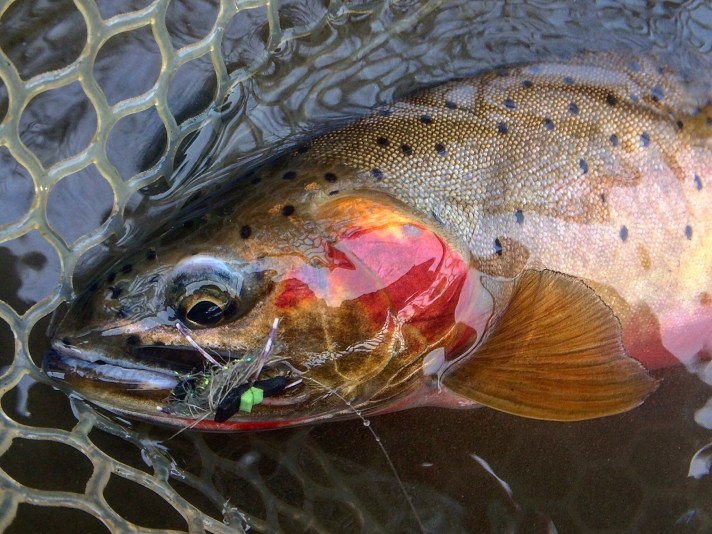 In the spring when we nymph, we are constantly changing depths with the type of water we fish. I add and subtract split shot and dropper flies as I read and interpret the water for anglers. We work on mends and different drift lanes, I will have anglers run two different rigs, with different flies and depths and drift different lanes in order to search out and locate where the fish are in the water column. Whether it be 3 feet or 9 feet deep…we will do everything we can to find those pesky troots in the spring.
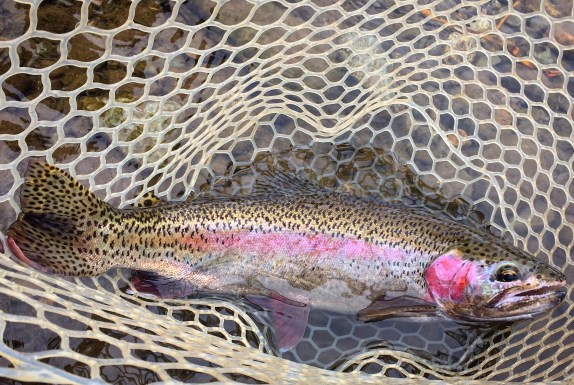 As we get further into spring and water temps start staying close or above 50 fish have more options for where they can hang out, and food. Every few weeks the trout get more options for food and fish start to move around in relation to that food. Some fish will key in on certain areas and food sources as they are more prevalent in that particular sections of river, while fish in another section may have different holding water, feeding water, and food options in general, and will react differently. When I get bored with one section, I try another. That’s what is great about the Yakima, every 20 miles of river it changes.
 Tamarack's Guide Service