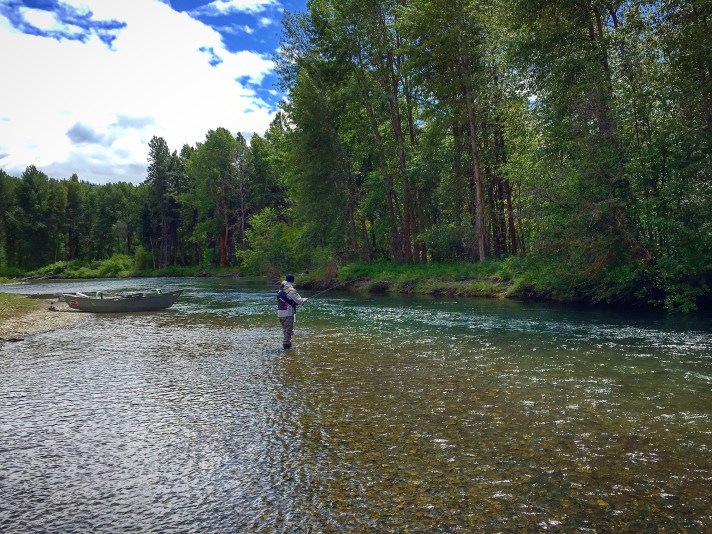
 The time is upon us. We have had over a week of over 85 degrees and this week it’s gonna be in the 90’s. This means that fish are gonna eat in the AM and in the PM and hunker down during the heat of the day. It’s also when the river is filled with tubers and rafters in the afternoon…a good time to do the same because fishing is typically slow with all that sunshine, heat, and butts floating over troots heads.
It’s the time of the year where we float wicked early. Like 5 am. And get off river before the heat. Then come back and fish the evening. Water temps have been good in the mainstem river and with the heavy flows for summer irrigation water temps should be good this summer. I’ve fished early AM in the upper and it’s been slow to start but with the week of warmer temps the water temps have settled in the high 50’s low 60’s which means it gets rowdy out there. Throwing big bugs with 3X tippet and fighting fish hard in the heavy current. It’s fast, it’s silly, and it’s wicked awesome and fun. Beat the sun to the river, catch a few big fish before 10 am. Or come for an evening and fish until dark and get big slurps from big durps of trout that are gorging themselves.
 With the heat comes hoppers, Yellow Sallies, big terrestrials like ants and beetles, and streamer fishing can be really fun. The nymphing in the morning can be stellar on smaller sparkly stuff both really deep and super shallow, and the good ‘ol dry dropper rig becomes a great producer.
When it comes to a double fly rig in the summer…I’ve got two methods I use more than any other. A shorter dry dropper with a big dry like a purple chubby, and a smaller size 14-16 lightning bug or something similar, about 16-24 inches below. Not 4 feet, the longer the tippet between the dry and the nymph…the more lag time between eat and set. And when the water is at 3800 cfs…you want zero lag in your sets because you’ll just miss fish. Tighten up that dropper rig, and cast for shorter more accurate drifts and you’ll have more success. Remember to use a nice heavy nymph, with a bead head of tungsten or similar to help drop the dropper fast in the heavier current.
The other double fly rig I use a lot of in the summer is the double dry. It’s by far my favorite of course…because it’s two dries! A larger attractor pattern like a purple chub or a madam x hair wing, with a smaller caddis or mayfly pattern 16-24 inches out the back. This is a great technique when fish are tight to the bank and you can’t land a nymph tight. Throw two dries, grab the fishes attention with the big fly, and then watch them take the smaller dry. It’s an easier meal, and if you cast and present right the smaller fly is within a few inches of the bank while the larger fly is 12 to 16 inches away from the bank. The fish sees the larger fly, decides to eat, then sees the smaller fly when they peel off the bank, and typically give a quick grab on the little fly since it’s closer and easier to eat. Boom…fish on.
 These methods work great early am and late pm in the summer. Fishing in the middle of the day will get too hot for lots of action. However there is this sweet window when fish cram big stuff before it’s so hot the just go down for the day. Hopper Time. This is when the heat has warmed the day up to 80 plus…right now it’s by like 10 am. Which is great because it’s the last 1-2 hours of your float if you started at 5 am. The heat gets the grasshoppers active and awake. They start flying around, feeding, doing all that hopper stuff that they do. Then you get a nice breeze…which is like every day on the Yak, or they venture to close to the overhanging grass and fall into the river, or they just hop a little too far from the bank…and they become fish food. Hoppers are a big crunchy, leggy, meal, that’s juicy when you bite into it…like a trout Twinkie wrapped in bacon. There are trout that risk their lives…literally…to get a few of these tasty treats before they get spotted by birds…or anglers.
The takes on hoppers are typically aggressive, and explosive. Remember it’s a big big so it’s gotta be killed and chewed on…so fish typically Hoover them hard. It’s awesome and in the heavy flows of summer it’s wicked fast. The last hour or your early morning day or the first hour or two of your afternoon evening float is hopper time. Just chuck them into the fishy looking stuff, if you’re not getting love try a smaller size and change up the colors. I like pink and yellow bodied ones but they get picky and like all sorts of colors. Red’s, purple, tan, orange, yellow, chartreuse, magenta, I mean get rowdy with the colors. Shit can get silly.
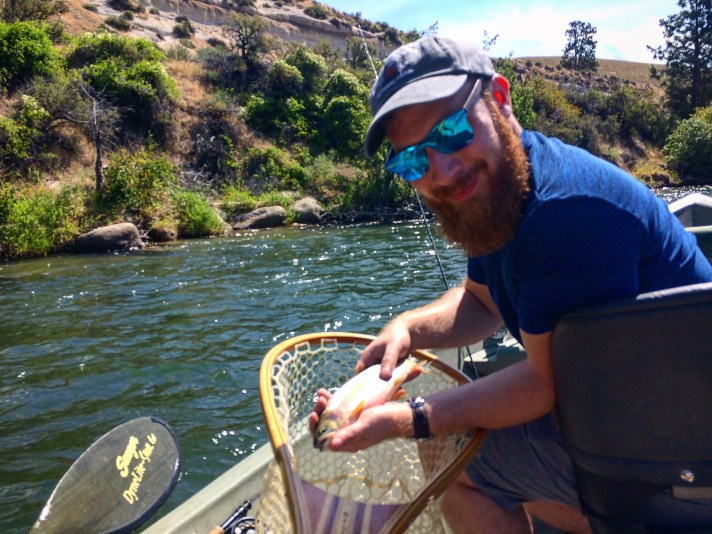 When it’s slow…try a streamer…strip it, bobber dog it, swing it…get meat in front of their faces with a sink tip that’s short but fast sinking. Like a 7ft 5ips, and go to town on a few big trout. Especially effective after you’ve caught a few on dries in the evening but can’t see anymore because it’s 9:15 and my crazy ass is still out there. Strip streamers to the take out and thank me later. Fish hunt at night…especially big ones…and right after all the other fish are done eating smaller bugs…a few of those beastly trout come out to eat the smaller fish that came out for caddis…appease them with baitfish patterns that are dark. It’s fun and a good way to end the day.
So there ya go…summer time in a nutshell. I’m back on the homewater Thursday through the weekend and into next week. I’ve got openings too. The summer time is wicked fun and fast fishing here on the Yakima…I highly recommend it. Book a trip and see for yourself.
Tamarack
 The fishing on the Yakima is pretty good right now. Since the flows have come up and the weather has warmed it finally feels like summer time fishing is in full swing. The upper river from South to Bristol is wicked high right now and the take out at State is pretty gnarly. The upper upper river near Easton, bullfrog, ensign, and three bridges is low, a little warmer, and has some big ol troots hanging around. I’ve been walking wading a lot in between trips and after trips up here. I even fished the bottom end of the LC last night and it got a little silly from 7:30pm to when we couldn’t really see anymore. Big eats on dries all around early am and late evening in the LC. The upper river has been really productive with nymphs in the morning but after 11:30-1pm depending on how cold it got the night before…I’ve been chucking hoppers, ants, and terrestrial style patterns tight to overhangs, the bank, on the seams, over boulder gardens, cutties love to smack things.
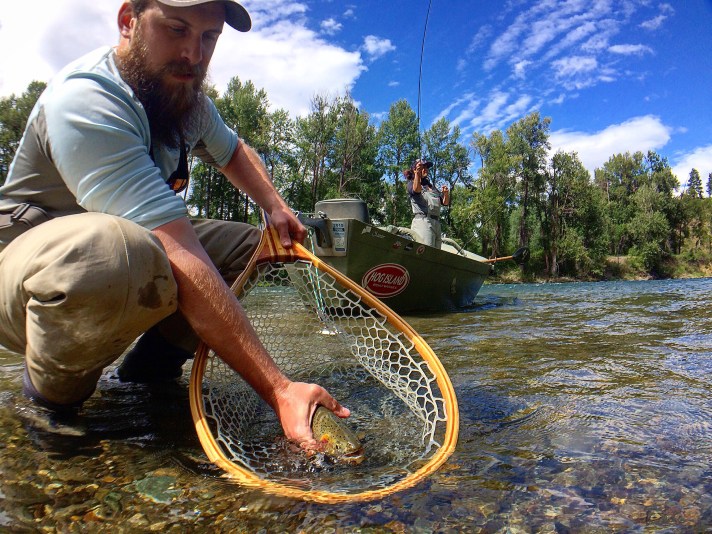 In the summer I’m the kinda guide who likes to guide during those times. Two anglers and a guide…breaking down the water, targeting slurpy risers and prime dry fly lines. Because it’s the summer time on the Yakima…the flows are jacked, the water temp is in the mid and upper 50’s…fish are hungry and will eat. And big fish are smart about when they eat…fish smarter…not harder. Big trout on the Yakima wake up wicked early and eat the last nights stoneflies and caddis as they wake up with the warmth of the sun and oviposit . Just hang out riverside as the sun rises…you’ll see it. It takes a little longer to happen in the upper because it still gets down into the 40’s at night. But that is happening less and less each day into August.
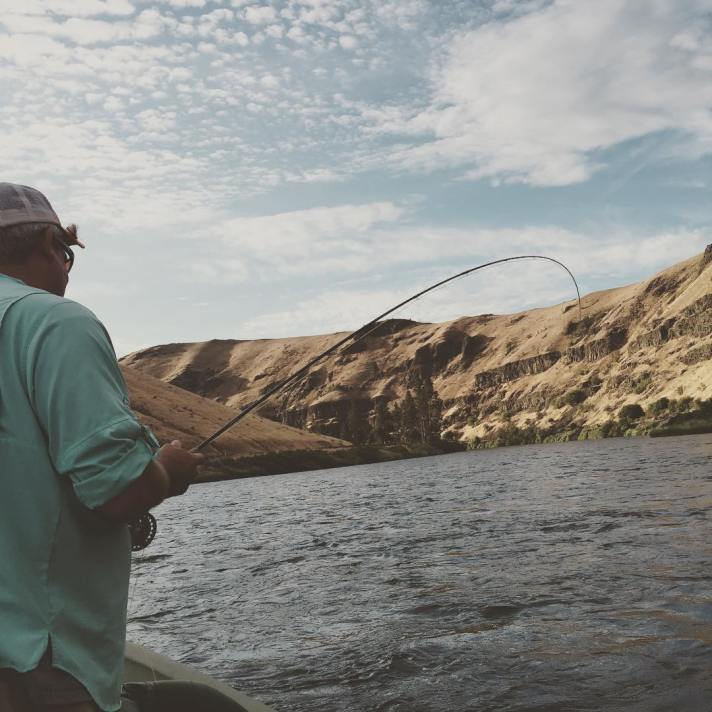 The evening summer time fishing is just like the mornings….only in reverse. And yes…trout can see in the dark…and they don’t like things to slap the river…no matter how dark it is…if they were brown trout I’d be saying something different but these Yakima Trout are super wary…and things that slap are typically attached to anglers that pull and fight back. In my experience…the trout here like it basically perfect when it comes to dry flies. As the light fades and shadows are cast it makes fish more inclined to eat…they are less exposed to predators and again, the air temperature and water temperature settle in to sweet spot for about 2 hrs every night before it gets to dark for anglers to effectively fish…they still eat…and big trout can be very nocturnal…especially for baitfish…but easy to slurp big bugs or caddis on the surface when you have less risk of getting eaten isn’t a bad option for a trout. Just wait until summer stones…I’ve camped on this river and chucked big dries in the absolute dark, blindly casting…and I’ve hooked fish…they can see it…you just can’t. That water temp settles back into the prime spot of mid to upper 50’s air temps drop to where caddis and evening duns hatch, and boom…you’ve got that window again. I typically fish dries until I can’t see anymore. Then anchor, grab the streamer rods…and strip them off the bank for the last half mile or so…cuz it’s fun, you can’t see, and you might meet a really big ass trout.
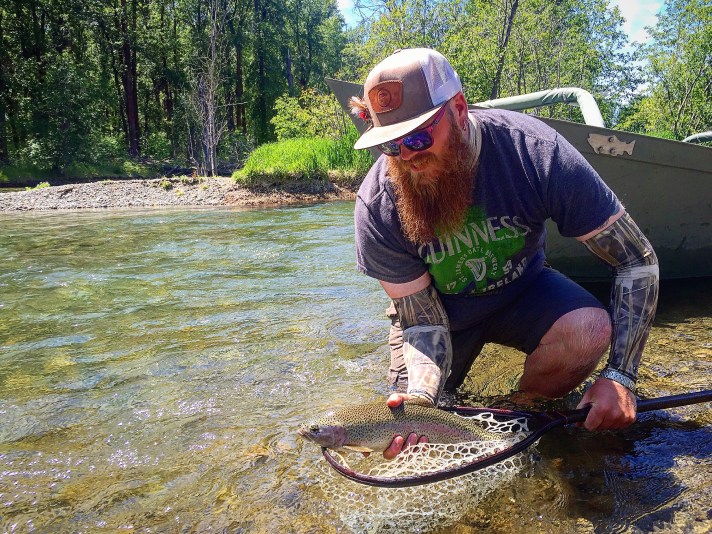 The summer has lots of dates open for fishing. I’ve got some of the best prices on the river for guide services. No shop, no employees, no lights to keep on, just my boat and I…rambling down the Yakima River chasin trout, tricking fish, and showing clients and anglers a good time. Come book a trip this summer with me and get in on some summer time fly fishing on the Yakima!
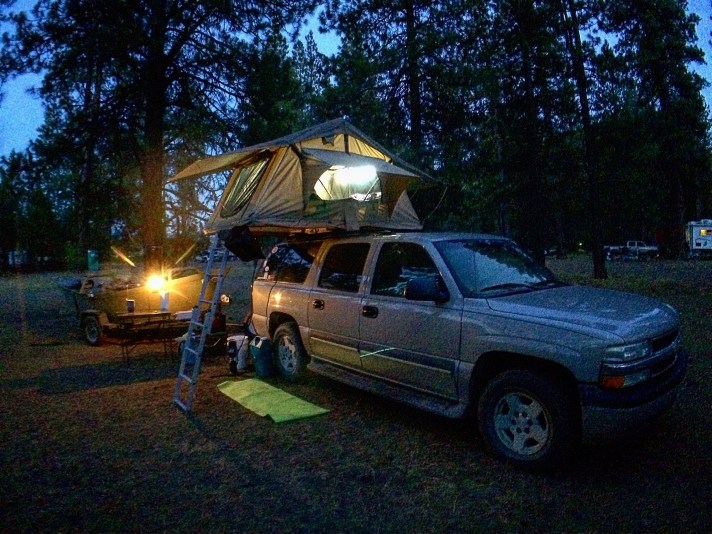 But there is the problem of hauling a boat. It’s also a big necessity for guiding. I’ve got a great drift boat, and she’s ready to roll for trout. I’m also looking at a skiff that can work down south and up here for freshwater warm water species like bass and pike. Where I live now has a lot more options for other species in the spring and early summer so a new boat is in the works for next year. Mmmm…new boat.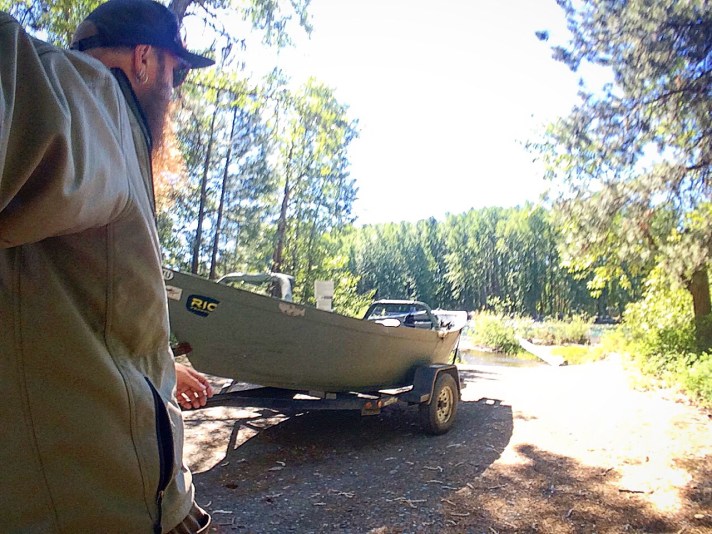
 Fish hold in water relative to its water temp and flow. When the water is sub 50 degrees, trout don’t need to eat very much…since their metabolism is directly related to water temp. Cold blooded…like a reptile. When metabolism levels are low, fish aren’t expelling much energy, or burning calories, so they don’t need to eat much…it’s like trout are sleepy. And in reality they are hibernating when water temps are really low. Since it’s cold and they don’t have to eat…they hold in the slow water. Once you find the slow water…it’s just a matter of adjusting the indicator so that the drift puts the flies in front of the sleepy troots. If the water is warm enough, typically above 45, a fish will eat a few things. That slow water can be all over. Could be a big pool, a large drop off that creates an undercurrent that is slower along the bottom of the river. Behind big fallen logs, behind boulders, along canyon walls and inside of corners. Nymphing when water temps are sub 50 boils down to finding that slow water speed wherever it may be in the water column. Setting your rig at a depth, then running the drift lanes to see if fish are there. Changing depths until your plugging the bottom. If you don’t get any trout love and you’ve also tried a few different rigs…then you read that water wrong. I do it all the time. I always fish the faster water too early because I’m anxious for clients to get big takes on nymph rigs in that faster stuff. It’s way more fun when the indicator goes down 3 feet or sideways 6 feet. Or the fish hits so hard and runs that’s it’s screaming line. That happened to me today while nymphing actually. Damn near made my heart jump out of my mouth I got hit with so much adrenaline. Ross even asked if I was okay. That shit is fun and I was making sure I was reading water right today while nymphing a few choice areas.
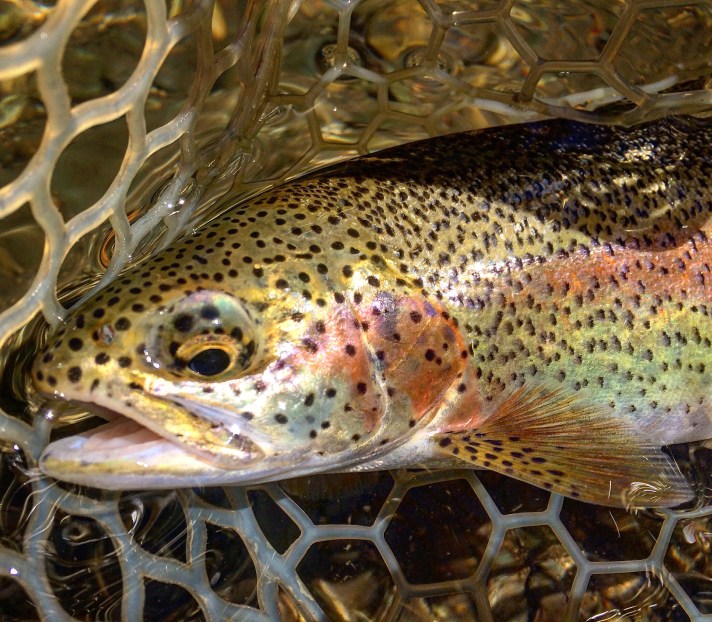
 When trout metabolism is high, in the 54-58 water temp range. Fishing is super juicy anglers. Super juicy. We are getting some days where the water temp gets up to 54 at it’s like a switch gets turned on. Numbers of fish start breaking a dozen and shit gets silly. Nymphing during this juiciest of times is all about where the fish are moving too and from. They don’t sit still down there anglers. They move…a lot. Mostly because they are after three things…food, cover, and oxygen. Trout will hang out in areas that have 2 of those 3 things throughout the day, but when things start to cool down they look for an place that gives them all three if possible. Once an angler starts to find that rhythm of how trout move about by fishing and reading the water, and trying the various depths and lanes and fly rigs, you end up garnishing a firm understanding in how to break down the nymphing game. It’s why I am always checking the surface temp throughout the day. Because three feet down it’s a little cooler. So when it’s 54 like it is now…trout are moving down there, and they are eating.
 So a quick recap: look for these areas that are faster moving as the water temp rises towards 62. Fishing them by running the various drift lanes of the water. Example, a 20 foot wide, deep run, below a riffle. I’d put a drift lane every 3 feet, 6-15ft drifts, at 6ft with a double nymph rig and split shot. Run that rig through across the area you are reading. If you pick up fish you read it right. If you don’t get fish…adjust your depth. I nymph at 12ft sometimes and I’ll nymph at 1 1/2ft in a riffle too. I’ve nymphed with sink tips too. Not too much anymore, I just use a regular old indicator rig. Sometimes a bobber style, other times a yarny. I add tippet if I need to go deeper off a standard 9ft or 12ft leader. Flies should match the nymph versions of what hatches throughout the day. Nymphing prior to the hatch, then switching to dries when you have active feeder. Then back to nymph and wet flies when things cool down.
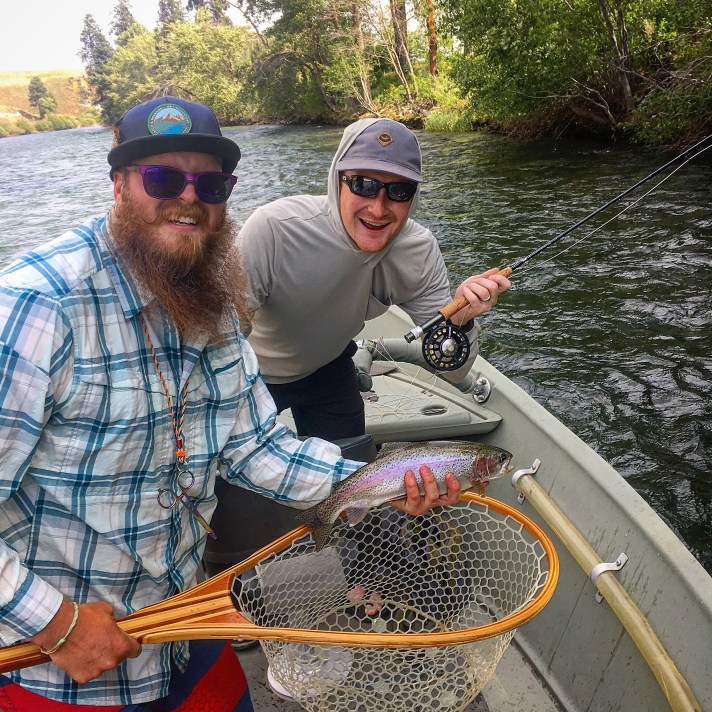 Hopefully that helps some of you fellow anglers out when you are trying to break down the nymphing game. It’s kinda all over the place but that’s kinda how this trout brain works. It’s a little scrambled from all the fish I miss I think. Like today…fish pulling line so fast my reel screamed and the fish was 60 feet out before I knew what the hell was happening. Damn near had a stroke with all that adrenaline when I felt that powerful fish kick my ass all over the river. Ugh, sad face…’tis the woes of the guide who is a little out of practice on his nymph game. Plus I’m weak sauce when playing fish…a habit I am seemingly always trying to break.
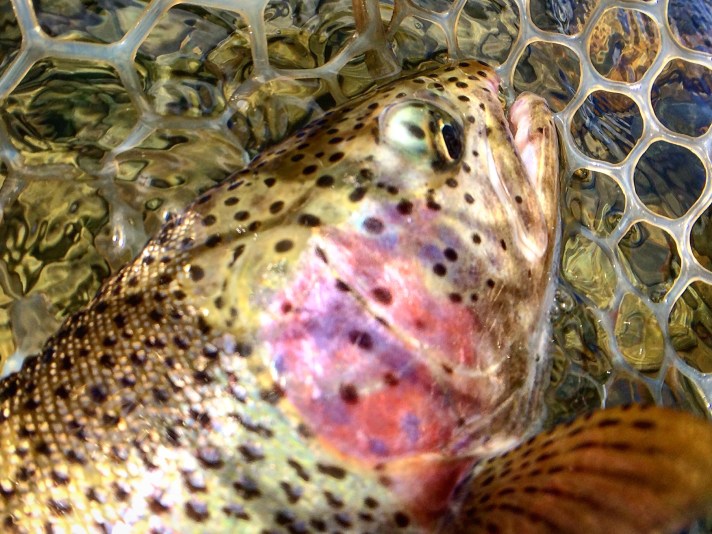 I’ve been in the upper, save for last evening big bust of a float in the LC, and the fish in the upper Yak have begun their annual key in to these big delicious golden treats. Every season sometime in June and the first few weeks of July, we get our Golden Stonefly Hatch. A large yellow and gold Stonefly species that is much like the Salmonfly. The females are typically 2-3 inches with males a little smaller. They hatch nocturnally or early in the morning, by climbing up onto rocks, the bank, and debris and popping out of their shuck. The change from nymph to adult can take a few minutes to hours depending on conditions. They’ve been in the nymph stage for a few years at this point. Once they hatch they retreat to the trees and brush to find a mate and get down to business.
 Once they’ve completed their funky fun time dance, the males die off, and 5 females hang out and develop an egg sac. Then as the heat of the day comes on, right now around 2-3 pm the females migrate back to the river by flying down to the surface and depositing eggs back into the river for the next generation of trout food. The eggs, dense little grains of sand sized waiting Stonefly larva, work their way down into the substrate of the rove bottom where they will reside for the next few years feeding and growing. The annual stonefly migration refers to the time when the nymphs come out of the substrate, get their last bit of feeding in by veraciously eating everything in sight before finally pushing to the surface to hatch.
 in great numbers it means shits about to go down. We had that last week and things are starting to go down this week.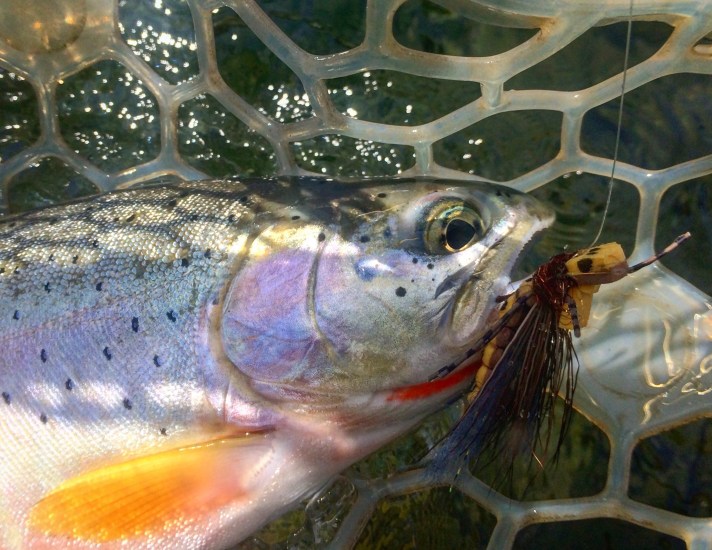
 Tamarack's Guide Service