So I asked on my FB page on what I should blog about because I can’t seem to find anything myself. A lack of fishing has left me with a bit of writers block. It’s finally subsiding and this season is gonna be a funky one on top of how funky its been since…well…last October I guess.
Reading water is the big thing. And of course, it is the one thing that I assume makes a guide a professional. I spend a lot of time when I am not riverside working out how trout and the river move about in relation to each other throughout the season. It seems to pay off as I have happy clients, lots of opportunity at fish, and a business that has grown every year since I started it…Thanks by the way. I was trained to read water. Its what a guide does. I didn’t come to it naturally, I was never a very fishy or outdoorsy person. But science has always been an interest and when I think back as to how I came into fly fishing from gear fishing, it was the science of fly fishing and how fly anglers had a more in depth approach to angling for a trout. The physics behind a fly cast, the way a fly drifts, how a trout sits in the water, and how it all works in relation to each other to produce this incredibly rich and fulfilling experience we call Fly Fishing. Its a funny thing, as I read it back out loud…sounds kinda corny but…who the hell cares…shit is fun.
Water reading is my favorite part of it all. It is where all the things that make up fly fishing intersect and we have that thing I like to call the click happen. When that drift floats just right, that fish is where it’s supposed to be, the trout rises, the angler sets, the angler and animal meet, mmmmm…ya…it all comes together at reading the water. So naturally that’s what every angler wants to improve on. It is something I as a guide am constantly improving on, testing, theorizing about, snorkeling around in exploration of; how trout live in and react to their environment is absolutely fascinating to me.
I had a client this past weekend that relayed to me his experiences with the upper Yakima…sadly it was the same experience I hear time and again; basically it amounts to…there are no fish in the upper Yakima. ‘Fished it a handful of times and never caught anything or saw anything.’ ‘Got a whitefish and some little fish, nothing else.’ ‘I just never see any fish rise in the upper.’ I hear a plethora of things about the upper that just aren’t true. Of course there are fish in the upper. Around 700-900 per mile in fact, depending on the stretch. Smaller water so of course smaller population. I might catch shit for it but the upper river fishes just fine for trout. Dry fly, nymph, streamer, swinging, stripping, soft hackles, big dries, terrestrials, trout spey, all that stuff…it all works up here…it all catches trout. There’s no secret there. It’s just a little tougher and requires a little more reading ability when it comes to water.
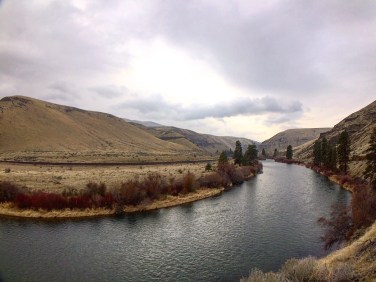
The upper river has a lot of water trout can play around in. Unlike the lower river, which is a fairly uniform canyon that has the same structure and holding water for about 26 miles. It is one giant stretch of water that is basically the same from one end to the other…making it a fantastic fishery, especially in the summer. I don’t actually hate the lower river. In fact I love caddis in the LC in the evening when its quiet just above MM 10. I am anxious for 5:30 am as the sun breaks the first few hill sides and lights up the river right slopes in the upper stretches before Big Horn. Big rainbows slurping big dries aggressively before anyone else is out on the river expect for the few that enjoy the enriching and fulfilling experience. But as far as reading the water goes…chuck it up against the bank and get it TIGHT! Looking for 2-6 foot drifts of drag free juiciness with a twitch or two around the overhangs.
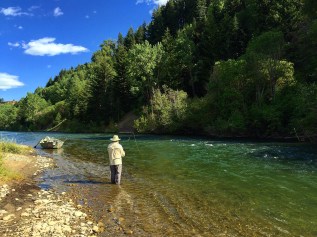
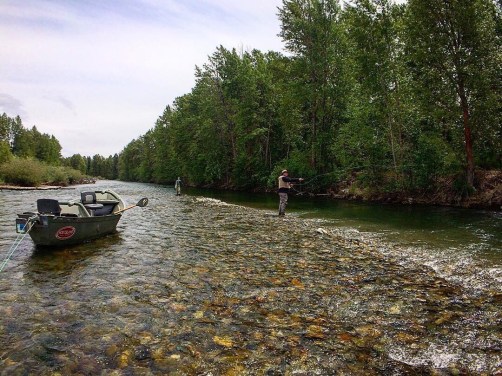
The upper river…nope that don’t work. Not at all. Sure there are a handful of hundred yard stretches of river bank that call for that technique but that won’t get you through the day up here. Trout have so much more prime real estate that is tightly compacted onto each other. This makes for a lot of different types of water to interpret. It can be overwhelming, especially to newer anglers. Every thirty yards there is something different a trout can use to their natural selection abilities. Because that is what reading water boils down to…its learning how a trout uses its environment to survive this harsh world! These fish have evolved to be adaptable and incredibly resilient to whatever the natural world throws at them. From predators, to human development, climate change, and even the pesky fly angler who keeps coming out and invading their space with fake food that is sharp. In the upper river these trout get to act like trout.
Since it is summer and from now until about September 10th the river will be fairly consistent with the minor adjustment in flows once we get irrigation water coming down in full supply. Lets focus on water reading in the summer here on the Yak. Lets break this down into three parts to keep it a little organized. Otherwise it will just all fall out in no particular order:
Flows. Water Temp. Food.
Seems pretty straight forward I know, but there is a lot that goes into each one.
Flows. The Yakima River is a tailwater. Meaning we have a controlled flow through the system by dams. This system supplies irrigation for a huge percentage of the country’s agriculture production. This gives us the benefit of consistency, which is what trout need in their lives if anglers what good opportunity at tricking them. Flows in the summer time in the Upper River hover between 2200-3800. Which is huge swing but because of the tailwater we have to deal with that large fluctuation. However, it is typically consistent once it gets set. At 2200-3200 cfs the river is pretty much the same. The spots trout can move around in and find food are all there in this range. When we bump up into 3200-3800 cfs things get a little different, and after 3800 cfs its just really high and I tend to stay out of it. It is not anywhere near natural at that level up here.
In the 2200-3200 range…which I we will refer to as the Juiciest Flow now…is pretty damn sweet. It has fast current in all the right places, gives trout deep holes to hold in, lots of riffles, side channels and braids fill with water at this flow. It gives trout access to other food sources by getting them closer to the overhanging foliage that grows in the summer, and all the new log jams and woody debris, as well as the gravel and substrate changes that expose food and move invertebrate life around just like it moves trout around. I love the upper at this flow.
Boulder Gardens: At the Juiciest Flow areas that have large boulders bigger than basketballs but smaller than a Volkswagen have 3-8 feet of water over them. This gives trout a large water column to hunt and search out food to keep up energy levels against the heavier flow. These areas are prime real estate for big stoneflies, caddis colonies, and bait fish. These are also areas where larger trout can hide in the deeper water and move up and down the water column freely without fear of predators while they feed on the plethora of options. These options are typically larger meals which bring larger trout as well. Trout have two things working for them in these ares. Big easy to find food, and deep water with lots of structure and cover, as well as changing currents and hydro-logical features they can use to their advantage against predators, competing fish, and anglers.
It is why you will see me slow down in areas with bigger water and fish the smaller seams and pockets among the boulders as they tend to hold large trout. The Bristol to Greenbridge Section is especially good for this water. The section from the Teanaway down to Bristol also has a lot of this water.
How to Fish Boulder Gardens Fishing these areas requires the person on the oars to slow the boat down and give the drifts enough time to get the fish’s attention. When Nymphing these areas I start out around 5 feet with split shot on a single or double fly rig. Using a drop or parachute cast I get the fly to drop quickly with aggressive mending to keep the nymph rig deep in the water column long enough to get the troots attention. I look for little soft currents; you will hear me refer to as slip streams. This is because when you snorkel, there are 3 dimensional soft spots where varying speeds of current meet and create areas where food, fish, and the water slows down and basically eddies on itself. Around the boulders and structure down there this also occurs. Along steep drop offs, slight gravel bars, big boulders or logs, they create these slips in the water column that trout key in on. Trout key in on them because this water gives them 2 of the 3 things they need. Food and Cover. The food gets stuck in here, say a big stonefly caught in the current, or a trout knocks a few cased caddis off the boulder with its nose and waits for them to hover in the slip stream and then inhales them before the other trout can. Or maybe a bait fish whacks its head on the rock and gets swept down into a drop where a big lurky bastard is sitting and it just hoovers it. MMmmm. ya.
You can see these Slip Streams when your indicator hovers and slows down but there is a bunch of current all around it..that means you are in one…and if your depth is right…you might be dangling those flies right in front of a trouts face…so watch your shit. If you fish these areas and you are getting hung up a lot you are too deep, so take 12 to 15 inches away. If you are shallow, a lot of the time the rig won’t ever slow down enough for you to see the slips because the weighted rig isn’t hitting them.
When dry fly fishing you are looking for the top currents seams and slips, the stuff that slows down in the top third of the water column. These are those diamond chop areas, big seams and areas where the current zippers together. They are also what us guides refer to as foam lines. Also the areas in front of and behind those big boulders. They create slower pockets of water for fish to hold in and wait for big food to pass over.
These are fun places to hook fish because they are usually larger trout and they have all that fast water to try and kick your ass in. They get airborne a lot, they bulldog in the bottom on the rocks. But they will tire quicker with patience and a bent stick.
Water Temp in Boulder Gardens Anglers need the water temp to be above 52 F for these areas to produce fish regularly. The sweet spot is 54-60 F. Fish are just gonna need to eat more at those temperatures. This also gives trout oxygen rich water.
Riffles at the Juiciest Flows are usually 1 to 3 feet deep and fast moving…faster than most anglers seem to fish. They can also be identified by having choppier water but not white water, with football sized rocks down to pebbles mixed together. They usually have steeper grade making them fast, and are even juicier when they have a gravel bar or a drop or two in them. Riffles generate a large percentage of the food for trout being home to the majority of mayfly populations and several caddis species. This is also an area where sculpin tend to feed.
We have riffles every hundred yards or so in some form here in the upper river. We get way more mayflies hatching than anywhere else. In the summer we have PMDs, Drakes, PEDs, and Tricos.

How To Fish Riffles I like to use fluffier dry flies or foam ones since they float better in the faster current. Lots of reach casts and longer leaders. Riffles usually have uniform current across them with only slight degrees of speed changes. A 45 degree upstream casting angle with a hard reach cast and a 12 foot leader is my preferred approach. Watch the sun angle and shadows cast over the riffle; the shallow water makes fish more aware of their surroundings.
When there is a hatch on or you have active feeders on the surface, trout are typically looking at a spot 3 to 6 feet in front of them, tracking the insect, and then rising quickly in the water column on a rhythm to grab the natural before lowering back to the bottom. When fish rise in riffles they are typically on some sort of rhythm. Observing that rhythm and trying to cast in sync with it and lead the fish to the fly so to speak is how I like to break down riffles when fish are active on top.
The trout hold on the bottom because it gives them the best cover. An osprey over head will have a harder time picking the trout out of the riffle it it holds on the bottom tight in the small slip stream created by the current meeting the river bottom. Cutthroat and Rainbows have spots specifically for this type of water. Those spots, especially on cutthroat, who tend to frequent these areas more than their rainbow cousins here on the Yakima, are more congregated on the back to help break up their tail and backside because they are constantly moving their tail fin to hold in the water. It’s also why I think cutties don’t get bigger shoulders, they like the richer oxygen content in the faster water and have evolved to be able to feed in it more effectively by being slimmer profile fish with quick bursts of speed to escape and evade. It’s why their tails are so big, green and filled with spots…they are moving it constantly so it needs more camo.
When I nymph these areas I set my indicator to 3-4 feet with a single fly, sometimes two but mostly I am fishing a smaller mayfly nymph of some form. Copper John, pheasant tail, purple batman prince. Same approach as the dry fly, 45 degrees upstream with the area I am focused on getting the drift through at 90 degrees. A large mend or two as soon as the cast lands, this ensures that the fly is at the bottom of the riffle when it drifts through the area at 90 degrees to the anglers cast. I will also mend when I get into the sweet spot of the drift sometimes to get the fly to hover for a moment…this can entice a strike. I rarely watch the indicator when fishing nymphs in riffles. I watch 3 feet in front of the indicator and the bottom of the river bed. In the upper you can see the fish move on the fly or change position to strike before the indicator drops, this gives you that spidey sense so many people I guide comment on. Trout hit fast in this water, and when you hook them they are gonna haul ass. They will spook every other fish in the riffle too. So when you are done with one trout give the riffle a few minutes and the fish will reset.
Water Temp in Riffles again this water temp at the Juiciest Flows needs to be in that sweet spot of 54-60 F for fish to be seeking out those areas for food. Otherwise there is no need to be in riffles if trout metabolism is not pushing them to eat more.
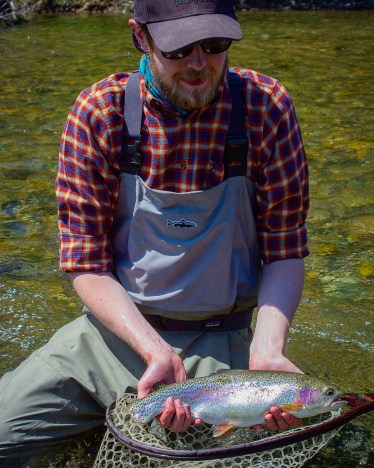
All the Other Stuff We also have a handful of other types of water in the upper. Which is why it gets a little overwhelming. We have those bank areas just like the lower canyon, but we have more trees up here, so we have lots more undercut banks, some that go several feet into the bank. We have cotton woods along the banks that have shallow roots that create big pockets along the banks with branches and foliage over them. These areas give trout everything they need and most to of them have names after trout caught from them. Places like Charlie’s House, Bills Place, Walter behind that rock along the bank above State. If you’ve fished with me you have probably heard of a few of these spots. These are what I like to call Trout Houses areas where a single or maybe 2 or 3 trout have carved out as theirs. It gives them cover, access to food, and oxygen as these areas in the summer have a lot of water running by them and shade which cools the water. These are areas that whether nymphing, streamer, or dry fly fishing, you get 1 maybe 3 tries at a presentation to the trout and if it decides to eat you get your shot. Off the top of my head, from Hanson to Bristol, I can think of over 30 spots like this for my anglers. There’s more, and as I go through my trouty brain I can damn near recall each one in detail from memory, and remember which clients and even some of the trout that have come together in these Trout Houses. These are those spots that just about anyone can look and say…”Yep…that looks like a trout could be in there.” They is just trouty.
There are the areas that fall into the categories of, drop offs, lips, slopes, troughs, pockets, shelves, and gravel bars. Techy Stuff, The substrate stuff, the River Bed. These are harder to find and read, and are easier to identify with a few snorkel runs. Fish camouflage into these areas by holding tight to the structure of the river bottom. IE, along the shelf, in the bottom of the trough, in the pocket behind the rock, along the slope of the bar. These are areas where fish that are moving around the system, from one feeding area to holding water, to another feeding spot or what have you…maybe the trout just wanted to go for swim because it could…they do that you know…swim just to swim…just like birds fly just to fly.
Trout may be hanging out for a bit because they have enough food there or enough cover, but they aren’t hanging out for extended periods. These areas are where trout do trout stuff and it makes it harder to read them. But knowing that trout do this kinda stuff and thinking how a trout might move around these areas is how you start to read it. Asking questions like. Where would the food come from? Where could they hide? Where might they be headed? These are the things that run through my brain when I look at these areas. These areas are identified by color changes in the water as you may not be able to see them otherwise. They also have lots of different currents in them. These are the areas where you look at and go…‘shit I don’t know‘. So I fish these with a purpose. 3 to 6 drifts in what could hold a fish by answering some of those previous questions and if I can get a good drift through them. If I do that and I get a fish…I read it right…if I don’t I go on to the next piece of water that looks good. Trout are not in these areas for extended periods so they feed opportunistically if at all, so a few drifts of whatever you may be throwing is a good method. If the trout is there, and it wants to eat…it will. If not…move on. If you fish with me these are those Techy Places I say ‘Might have somebody home today.’ and I let you work for a few minutes before pushing on to another spot.
Finally we have the last few pieces of water I will talk about. Runs, Eddies, and Pools.
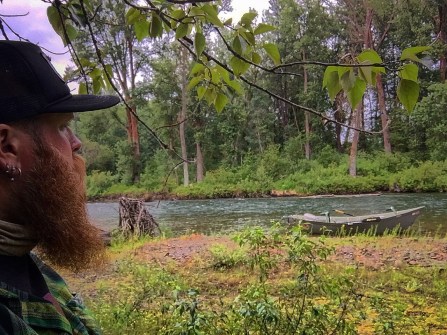
Runs are those big long stretches of uniform current that is anywhere from 5-12 ft deep. These are not holding areas for trout. They are moving through them on their way to other parts of the river. 6 to 12 good drifts by breaking the water down with 3-6 different drift lanes is how I fish them. If they are there and want to eat they will. They are less picky here, and I usually nymph or streamer fish these areas as fish are less inclined to move up through all that water for dries. I love swinging these with a heavier sink tip.
Eddies are those areas along the bank or where two big currents meet and create a slow current that works backwards against the main river’s flow path. These can be really big or ever so slight. But they are areas where food gets stuck in the softer currents and seams created by the eddy. So naturally fish will look for food here. They are harder to nymph as the currents on top and underneath are almost always different. But fish picking bugs off the surface are easier to target here. Wait for the rise and then try and land it near the spot of the rise. Headhunting. Its fun, and you never know what kinda fish you are gonna get. I skip these when I don’t see bugs or feeders in them.
Pools are those big deep spots in river, usually slow and ominous, with the chance of a large trout lurking in the depths. I fish for the risers that I see in them, and I swing streamers through them if I don’t. If they have a nice lip at the top of them with enough current I might run a nymph over that lip at 6-8 feet and mend really aggressively as the indicator hits the drop into the pool. Sometimes fish are tucked right on that lip waiting for food to drop into their mouths. Cool places to hook fish as they tussle with you in the depths before they show themselves.
Water Temp in those last three water types follows the others in that sweet spot of 54-60 F.
All these places still exists and hold fish when the flows increase out of the Juiciest Flow level above 3200 cfs. The closer to 3800 and over the less likely you will be able to get the fish to respond. Things are just moving to fast at that point and it makes it harder for anglers to present the fly effectively. It is why I am in the LC when the flows are too high in the upper. When we break 3200 cfs we usually have water temps that are up in the 58-65 F range. Fish still eat, but we play them hard and fast, and get them back in the river. After 65 F I won’t fish or guide. When we are above 3200 cfs things are just moving faster so you need to be quick, and if the water temp is lower than the optimal range it ain’t gonna happen. Fish go deep, hold under all that current and feed along the bottom. They hunker down, or move into side channels for respite and food.
Side Channels these need a special little spot for themselves. These areas are usually a trickle or dry other times of the year. When the water gets up into the Juiciest Flow and above fishing these is always a good idea. They fish just like the mainstem, just a smaller body of water. They have all the same things described above, just treat them like little mini rivers. Big trout get stuck in them too. So don’t skip walking them and seeing if any fish are in them when you find one in the summer.
Foliage and Overhangs in the summer are all over the sides of the river. They are usually part of another kind of water, say an eddy with a bush on its edge, or a riffle with an overhand on the river left side, or a side channel with a bunch of bushes and bramble. These areas are where trout get opportunity at terrestrial insects and aquatic species mating in the foliage. In the upper when you see woody debris, fallen trees, roots, or bigger bushes and branches hanging over the river, tall grass, bushes, along the edges, this is where ants, grasshopper, big stonefly adults, and caddis dries work well. They are added bonuses to the water you are already reading and typically turn out to be Trout Houses.
Alright, there was a lot in there. That’s what is going on in my head when I am looking at water in the summer time. These interpretations work on other trout waters too and have been tried and tested all over.
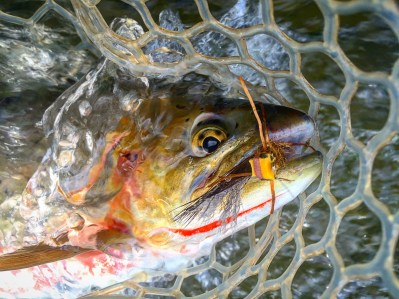
This is a general overview too, when I get clients on the water we get to break water down in real time, approach it with fly and rod and use different casts and angles to make angling more efficient to that specific read of water. Once the water is read, then you have to approach it as an angler and present the fly no matter the technique in a manner that works in relation to the read of the water. If you do that right…you end up with fish eating your fly. All this changes when flows drop and temps increase or decrease, sunshine and shade can play a role in how responsive fish are to their environment, predators, angling pressure, wind, bug activity, and things like water clarity are also factored into my reading of water and are more of a real time part of the process. Those are the variables that have to be thrown into the equation when reading the water and sometimes make the outcome less or more rewarding depending. To those skills I can say…it comes with more time on the water. I can only relay so much information before time on the water and doing the actual act of reading and fishing the water is necessary to develop the skills further.
I will note a few other things to throw in when reading water: Fish like shade not sun for the most part. Trout are cautious but opportunistic. I switch flies every 15-25 minutes or every 300-800 yards if they aren’t producing fish. Fish can’t count the legs on the fly. Smaller is better when it comes to just about all fly selections. Fish the water, not the fish. Sparkly flies work just as well on sunny days as they do on over cast days. Trout like the rain, but not downpours. If the wind is blowing hard enough, fish won’t have enough stimulus to react to the hatch. Teaching others is the best way to learn new stuff. Less is more. Learn to freaking reach cast. Mend…Mend. Don’t forget all the other stuff happening around you when you are fly fishing.
Tamarack


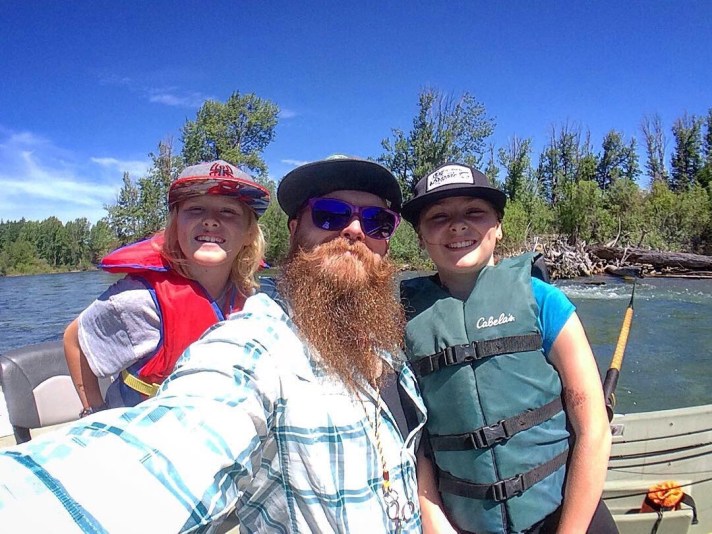
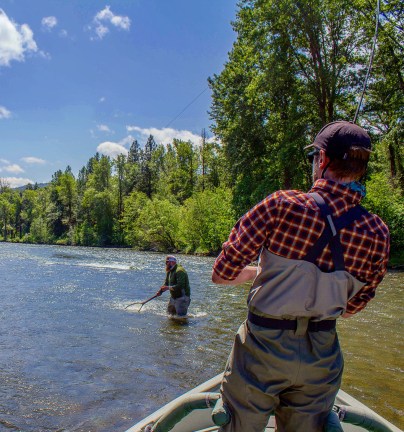 It has been a rough spring and if you are a trout angler its not great right now. There are only a few rivers that are not completely toasted and blown out, but our beloved Yakima is on the drop.
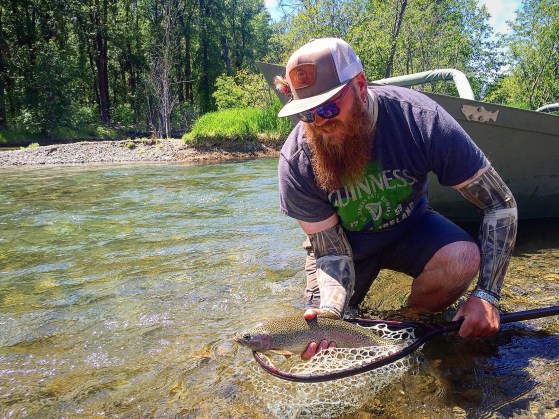 The high flows also push the trout around the system in an unnatural manner. Because there is so much volume the water forces the fish into the banks of the river. This makes the 1000 trout per mile in this river a little easier to target. The closer to the bank the bigger the fish. They tuck up tight into the small stuff, little shady spots, structure, overhangs, high grassy banks, they are all tucked up in there. They are forced there, but its also where the food happens to be. Terrestrials insects like ants, beetles, and grasshoppers fall in and make easy opportunistic food. We also have caddis that do most of their business along the bank and it will be the main food source for fish throughout the summer. The stoneflies will start to show up and fish will smack them, typically late in teh afternoon when they return to oviposit. Mayflies in the midafternoon, drakes and browns mostly, target riffle feeders. We also have the early morning stuff start to pick up as the air temps rise. Stoneflies in the AM, and the PMD hatch in the upper can be pretty amazing when things get rolling. The summer time is one of the best times to come out and enjoy the unique tailwater fishery we have here on the Yakima.
 The summer calendar is already starting to fill up. Since there hasn’t been much fishing I expect that the guide trips will be plentiful and I have already had lots of calls on when things are gonna get back into shape. We will be rolling by June, if not hopefully, by Memorial Day Weekend. These fish have had one hell of a break and it’s time to remind them that there are anglers out here! Give me a call, send me an email, holler at me riverside cuz I will be out there starting this coming week! It’s time to go fishing! After this long spring I am just as anxious to get after it as every other angler! It is finally here!!!
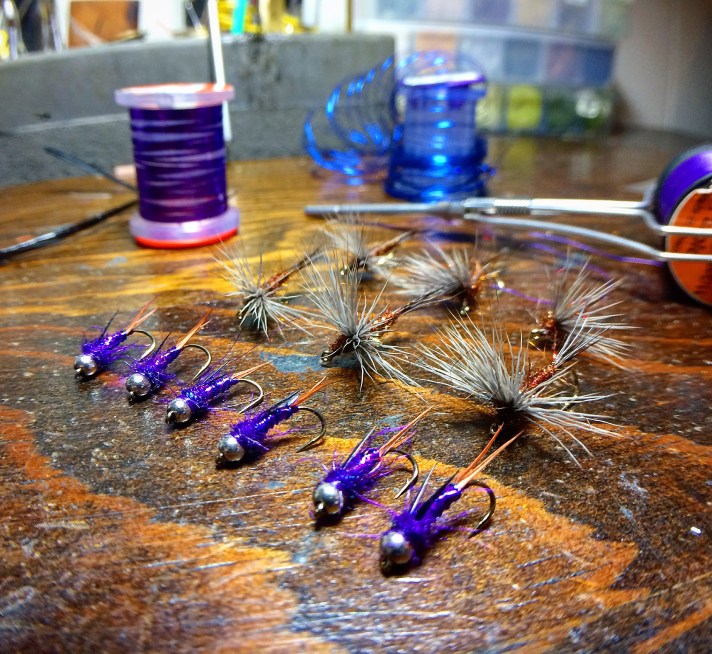 Fishing has been pretty good this past week. We’ve had a good window of as good as it gets spring conditions. We shall see how long they hold but it looks like I will be sitting at the vise quite a bit this next week. Looks like Wednesday this coming week the river is going to rise. If it will be enough to blow out is anyone’s guess right now. We just have to wait and see. It is going to get really warm this coming week. And that 107% snow pack has to go somewhere.
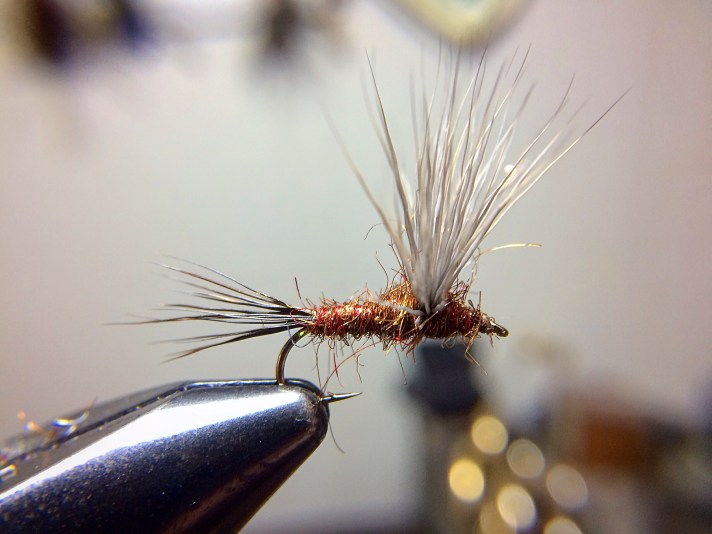 I started teaching classes. Fine tuning my skills through teaching, large scale tying, and experimenting with different patterns for multiple species. I didn’t live close to the river so I would also tie bass and carp flies. I would take notes on the flies I tied, how they held up, how they looked in the water. I made one of those fly tanks with the water and the stream flow thing, I made it out of an old fish tank. Tested everything in it. Put a mirror in the bottom so I could see what the profile of the fly looked like to the fish. Brought bugs home and put them in the tank with the flies and studied them. I totally immersed myself in it. Entomology is super cool when you are a big science nerd like me. I was obsessed with tying perfect flies and perfectly mimicking naturals. I got really good at it, have some patterns that just work, because of it. But my mentor reminded me about the three things that trout need when it comes to a fly. Size, Silhouette, Color.
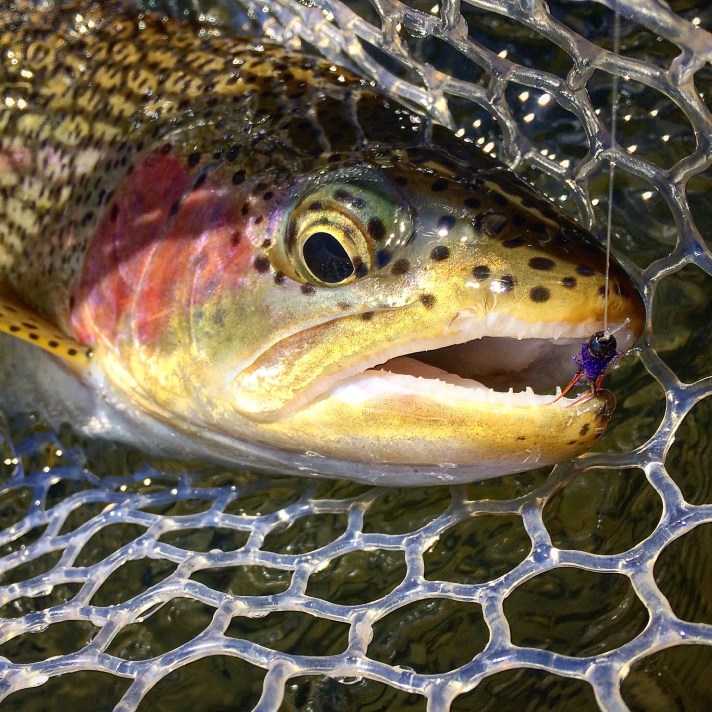 My world exploded. I really started to find my kind of sweet spot with tying. Your flies start looking like they are yours….not like all the other ones…versions of the other ones…your versions…and they work….sometimes better. I tie because I believe that trout eat things they don’t see on a regular basis. I have seen so many trout refuse store bought flies…those picky trout…the ones you hear about but can’t seem to get yourself…well…that fly that everyone is throwing at them…could be the reason. You won’t find that stuff in my box. Sure I’ve got a few store bought…mostly because I still buy a few that strike my fancy and then tie more to look like them. I love when clients can’t tell the difference between the two…except mine will hold up to more trout typically.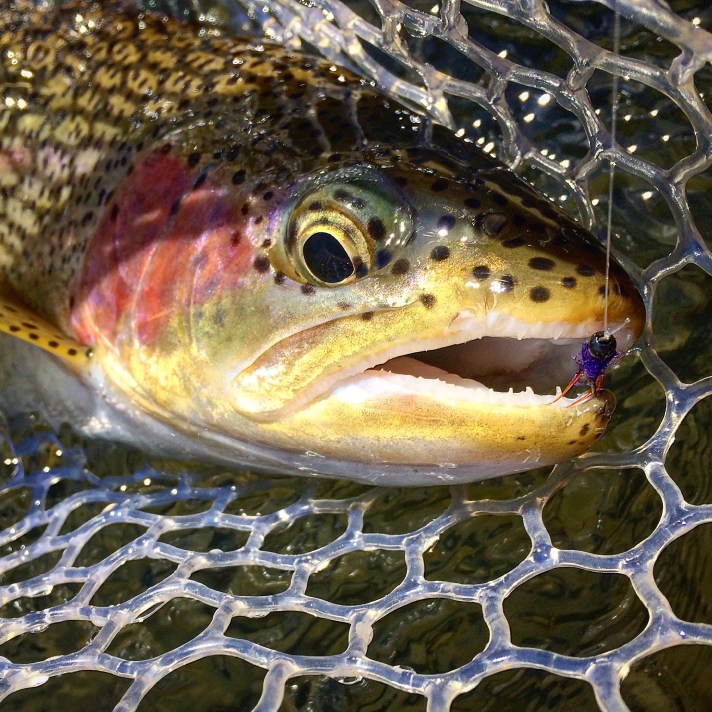
 Tamarack's Guide Service