Well Anglers…the end of the season is fast approaching. We have 3 weeks of the season left before things start to really slow down here on the Yakima.
The October Caddis are hatching, the salmon are spawning, the fish are chasing streamers, and our late season mayfly hatches are in full swing. The time is now…it is FISHTOBER and you need to get in on it before its over!!!
These are the following days I still have open for the first 3 weeks of the month:
I am wide open after that but the fishing have slowed so if you are looking for a date in late October into early November just contact me and we can talk about it…I may also be fishing for steelhead and salmon and may not answer by the end of the month…just fyi.
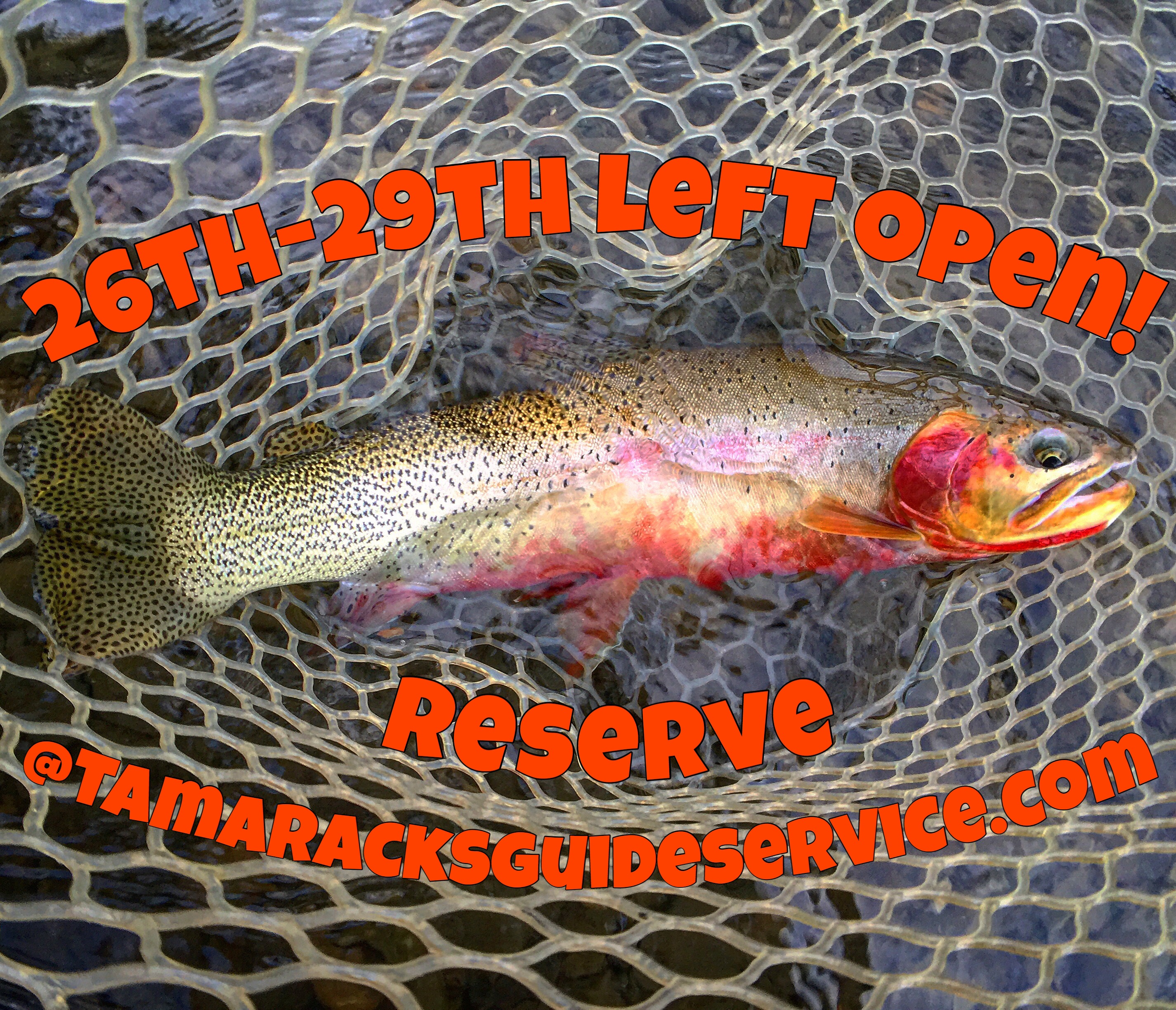
I’ve got the 26th – 29th still open for this month. We’ve got about 4-5 weeks of fishing left before things really ramp down here on the Yakima.
The month of FISHTOBER is here. The dry fly fishing is amazing, the weather is great, the wading is perfect, the smoke is gone, and the mayfly hatches are here, as well as craneflies, October Caddis, and streamers are picking up fish on the swing. It’s time to chase trout and my calendar is almost full for this month and October is filling in quick.
Reserve a day with me in the water, it’s all good, walk and wades, half day, full day floats. The upper is fishing amazing right now and the lower will be in great shape soon as it cools down and the hatches start coming off.
Call, email, or yell at me on the river, you can also hit the Reserve Today tab in the menu.
The end of August is upon us. The Labor Day Weekend will be over soon. And despite the wildfire currently raging only 11 miles from where I am sitting…the Autumn will take on a softer tone, a slower pace, with a briskness to each morning, and a slow cool down every evening. Everything around me on the river points to its approach. The caterpillars in the trees in cocoon. The preliminary large fall caddis hatching sporadically. The craneflies dancing and dabbing along the river’s soft edges. The water has dropped, even with the heat and can feel the cold creeping back into the water. My toes ache after standing in the river in the mornings. The sun angle, even through the amber haze from the smoke, has changed, elongating the shadows, and shortening the days. The heat of the day dissipates hastily, leaving the fringes of the day cool and calm.
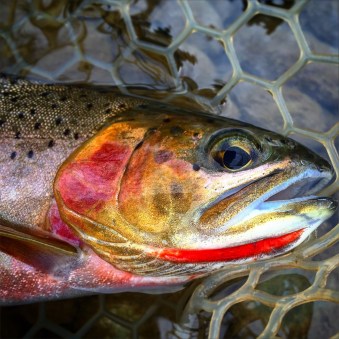
Fall Season Cutty
I love the slowness of the Autumn. June, July, and August this season have been busy, heavy rowing, and lots of fish. With around 100 trips already completed this season I feel pretty fortunate considering the way this season started. The Yakima may be cold hearted some times, but she is the most consistent in the Autumn, and above all things required for good trout fishing….consistency is the key. In my angling opinion the Yakima River is the best in the Autumn, as a guide she becomes an absolute blast…but more of a challenge. Already the upper river trout are becoming selective, shy, and tricky to locate from day to day. But…nature works in favor of the angler, and as the temps drop, the hatches return to normal schedules, and the trout feed in trance like rhythms…the fishing becomes…well for me its that perfect balance between utterly unforgiving and frustrating….and fucking amazing.
This time usually comes about around the 2nd week of September when we’ve beaten the last throws of summer. A few things are happening as we inch closer to the end of the season. The stonefly hatch returns a normal time…Right now the temperatures and conditions for good a decent stonefly hatch are around 4 am right now…when its dark. And fish in the upper river are eating them. I know this, because I’ve seen them do it. I saw them do it this morning. The first three fish of today’s trip, all good size, all good solid smacks at the fly, no thought, just a big ol’ eat…all three missed! I was a little bummed before 8 am today.
Summer/Shortwing Stonefly
There are Summer Stones or Shortwing Stones hatching. And they continue to hatch into mid September in the upper river. While the lower river stones are just about done, on a normal year the colder water and colder nights in the upper river elongate the hatch and as the temps settle the hatch shifts from 4 am to around 7 am. This is already starting in the upper. We’ve had some 40 degree nights. When this happens the stoneflies hatch earlier in the evening, but the majority of the hatch shifts to the morning. Then the shortwing males that typically hatch first show up and are all over the banks and brushy overhangs. The females don’t arrive until the morning. So its just a bunch of dude stoneflies hanging out in the evening getting hoovered by nocturnal feeding trout. Right now the females are around at 4 am. Those bigger wet shucks on the rocks when you get on water at 7 am right now. Those are the females and you missed them by 3 hours. But it’s dark AF so its not your fault.
But the Autumn works in favor of the angler. The temperatures shift and the hatch follows. The males still hatch when its evening and typically around 9-11pm if you camp on the river in early September. The ladies show up at first light typically. They hatch, quickly, along the rocks, where fish can’t get them. They find a mate along the bank, do their thing, and then the males die…get eaten…and the females return to oviposit before it gets to hot and light out so the birds can’t get at them. A big big flying around in the afternoon light gets eaten 9 times out of 10. So the Summer or Shortwing Stones get down to business early before the temps start getting closer to freezing. I have seen that hatch last into the week of the 20th in the upper river. While the LC is in that weird lull of lower flows, fish moving, and no bugs yet because the water is still to warm and the summer lingers in that basalt canyon.
Fishing large dry flies as the light comes onto the river is the preferred method to trick fish in early September. Trout will eat nymphs in the am…but come on…2 nice trout on a nymph are better than 5 on the nymph…at least for me anyway but I don’t chase numbers and I like dry fly eats better than indicator drops. Besides…as that pink sunlight hits the edges of the river through the trees. Long warm shadows against the cool night air clinging to the surface of the river. A slight mist, breath just visible. A deep inhale…as the large dry fly drifts along the seam, touching the light, presenting a dark silhouette to the trout lurking just below. The nose breaking the surface, your breath pushing through the cold air billowing with your excitement. The rod bends, and there is a deep, ferocious, and quite angry headshake from the wild animal who’s morning you just completely ruined. It’s F’ing glorious people, and after 5 refusals from 5 bigger trout the past 20 minutes as the sweet spot of when big fish eat fades; it beats an orange indicator dipping in the morning…just saying.
The Famous, “Nate’s Crane”
The afternoons are filled with cranefly eats. Smaller fish snapping at dabbing and skating cranes as they bustle about the river’s surface gangily and clumsily, rolling across a riffle only to have a large cutthroat lunge out of the river at it and miss. But a cranefly dry stuck in the surface attached to my fly line…ya…they don’t miss that very much. Dead drift them through the fast water, and skate them through the soft edges and eddies…trout will be there…the more bugs you see flying around the more you should be throwing big cranefly dries. They are already hatching and as the temps settle and cool they will only get thicker, typically peaking around the 15th-20th of September and trailing into the last week of the month. A great hatch, thick up here, and cutthroat and cranes are what dry fly fishing is all about…its amazing…and anxiously wait for it every season…its my second favorite hatch behind March Browns.
Autumn Rain and Mayfly Eats
The cooler days will bring us mayflies but they won’t be prolific until the day times highs stay under 65 and the low pressure systems return and bring us rains and cloud cover. Then Light Cahills, Mahogany’s, and BWO’s will be on the menu in the afternoon when pods of fish get into that oh so sweet rhythm and you have to cast in time and sync up with the river, the drift, and the trout. The juicy stuff.
But everyone knows that there is this large moth like insect that arrives in the last week of September and brings us into the month of Fishtober. The last of the season…the home stretch…the final countdown…the end of the season. We shall touch on Fishtober and those deliciously delectable October Caddis show up. They are getting there. You can grab one off the under side of the rocks and open them up and see for yourself. If they still have a black head then they are not ready. If they are all orange but don’t have wings formed yet, they are about 10 days to 2 weeks out. If they have wings…you will probably see them flying around in the evenings at dusk. As the temps get colder the hatch intensifies and settles in the later afternoon.
Last season globs of them were falling out of the trees the 3rd week of October…I know because I took the whole week off and fished every day. I will be working this season…so don’t hesitate to get on the calendar soon…I am almost full in September and October goes fast.
Hope to see ya out here this Autumn. Part 2 will come out after I finish the next 5 trips in a row.
So, I see a lot of anglers over the course of the season. From experienced anglers to brand newbies. And the Yakima is an equalizer. It’s tough no matter your skill level. It is why I enjoy guiding it. During the summer months its actually the easiest to catch our Wild Yakima River Trout. This is because the high flows of irrigation water create a unique summer tail-water that is unlike many western rivers.
The fish are pushed out from the middle of the river due to the sheer volume of water that is running down this river. Especially in the Lower Canyon but this summer time phenomenon happens across the entire watershed. The fish are forced to look for food and shelter along the banks of the river. Its where the softest water is, its where the most food is, and its where they can find cover while still being able to find food and water that allows them to rest and not burn through all their energy.
It’s survival out there, and the big fish take all the good spots close to the food and the cover, and force the smaller fish into the current where they have to find structure and boulders to hide in. That’s why the dry dropper works so well. Every smaller fish is out there battling the current so they have to eat…constantly, so you can pick off smaller fish all day long. Target the seams in and among the boulders and structure and nymph between 2-4 feet. Small nymph, preferably with a tungsten bead.
But we are here to talk about dry fly fishing, and how mending is making you suck at it.
When fishing from a boat on the Yakima in the summer, the boat gets to do most of the work. A good guide or oarsmen will set the boat around 20 to 30 feet and you can cast big fat dries tight as possible to bank to trick the largest fish. I always throw a single big dry when I am after the big fish. The dropper is great, but you sacrifice accuracy and the ability to get close to the bank with a dropper getting flung around behind your chubby.
A 45 degree angle is a must, especially in the faster water where there is a slipstream of softer current the forms tight to the bank where big fish and food hang out. You would be amazed at the speed of the water in which we find these fish in the summer time. When you cast big dries you have to be accurate, 9 times out of 10, I tell my anglers I am looking for 2 to 4 foot drifts that are within 6 inches or less of the bank. When the fly drifts out of that 6 inch zone its time to recast. For experienced anglers I tell them 2 inches. If the boat is set right and the speed of the boat is right, you can get plenty of quick short drifts at every juicy trouty spot. The problem arises…when mending starts.
Mending your dry fly is one of those things that if done right is great, but its not easy and most people lose the drift right when they need it…because they mend instead of throw a better cast. A accurate, over the head, down to the target, at a 45 degree angle with minimal slack, will get the proper drift damn near every time…but it ain’t easy. But when you get it…BOOM!
So, if you find yourself fishing and constantly having to mend your dry fly a couple of things are working against you.
Your oarsmen or guide needs to slow the boat down. I see it all the time, running and gunning, and missing all the fish. There are only around 1000 fish per mile on this river, the water is 3 times the size it normally is in the summer. These fish are spread out, and they need time to look at the fly. So the boat needs to go slow, which means you need to row if you are on the sticks.
Your angle is off. You may think its a 45 degree but more than likely its to shallow and you are closer to casting perpendicular to the bank which is a no no when dry fly fishing here in the summer. This is for two reasons.
The first and most important is, when you cast perpendicular or straight at the bank, the slack that is there will immediately go down river in front of the fly because the water between the boat and where the fly rides next to the bank is faster than the target water. Cross currents are a bitch. This forces you to mend immediately which is what we have to do in nymphing, and we ain’t nymphing. Every time you mend, your fly will get pulled out of position, and if it doesn’t and you do get a good drift you are probably drifting right through the back anglers water because you should be down further in front of the boat.
The second reason is if you do hook into a fish, especially a big fish, the trout will do one of two things. Go under the boat and probably break us off, or go behind the boat and head upriver, in which case, they have all the advantage and will probably break us off. So…get your angles down river.
Your leader is too short. I like a long leader for big dry fly fishing, and a fast action rod. This way you can cast accurately with one shot, it lands quickly, and you can fish just the leader if you have to get in close and keep the fly line off the river completely. I like 10 to 12 feet of leader. 3X or 4X. Play fish fast and hard, get them in the net and back in the river.
Practice. If you wanna catch a lot of trout in the summer, you need to practice accuracy. Being able to pick up and drop the fly on target in one shot every time will produce more fish. Its just the way it works in the summer here. I can usually get newbie anglers to get casting in the right zone in about 2 hours, then you get opportunity at some nice trout and learn how to play them in this heavy water, because you will lose the first few if you aren’t ready or aren’t listening.
So stop mending your dry fly casts and change your angler down river so you can get short 2-4 foot drifts within 6 inches of the bank. Fish big bugs, think hoppers, ants, beetles, and summer stoneflies. Fish are having to burn a lot of energy battling this heavier current and the water temps are in the upper 50’s and low 60’s so they are always hungry. They eat in cycles but as the summer progresses they tend to get very opportunistic. This is why big bugs work. Typically fish will go after the most abundant food source but when the flows are jacked, you are battling for position like its a NASCAR race, and a big juicy, foamy, leggy, buggy, looking thing floats over head…you are gonna snack on it.
It is that time of the season where I am on river less than I would like to be but am forced to the fringes of the day to chase trout. August is my least favorite month personally for fishing, but it is by far one of my favorite for guiding as long as conditions allow.
Big bugs, big eats, fast retrieves, and quick releases. Do that 15 to 30 times, rinse repeat, 5 hours at a time, every morning and evening, for about 3-6 weeks straight if you’re lucky. I am getting ready for 7 days on in a row starting at 5:30 am tomorrow. Guiding in the summer is fast, fun, and high energy, and for someone like me, it is just a blast. And it is by far the best time for new anglers to come learn to fly fish here on the Yakima.
One of the other reasons I get stoked this time of year besides the awesome guiding, is the fact that every day brings me closer to my favorite time of the year…Autumn. The sockeye return, the river drops, the temperatures cool, the days slow down, and the trout become eager for food, and begin acting like their normal trouty selves after a heavy water summer. It’s gonna be good.
I love guiding the summer, especially with new anglers, but the late season is also one of the most consistent times of year for good fishing here on the Yakima. My September is already filling up quickly. You say crane fly and cutthroat in the same sentence to the right person and they are telling you to take their money to reserve a day.
We are in the meat of August and summer time fishing. Its hot, but it will simmer down next week. The early morning water temps are good, but the late afternoon is starting to show us 65 degrees and above in the lower canyon sections of the river. Upper river is high but fishing well. Water temps are good.
I have days still open in August, hopper fishing is in full swing, stoneflies are hatching, and of course the very popular caddis is always a good bet. Early mornings are stellar right now. Give me a call, and we can chase some wild trout before noon and you can beat the heat of the day indoors or at the local swimming hole.
Next Blog, “Mending is making your presentation shit. A lesson on proper dry fly casting from someone who watches people miss fish for a living.” Or something like that.
Its been a tough one this early season. But all that is behind us now. It is now the time of year where I get to work. It’s an all day erry day time of the season…true Guide Season for me. When there are no days off, and the days start to run together and your body moves off of any sort of normal schedule and you are just on river time.
I start telling the same stories to new clients 5 out of 7 trips, I get to make new stories with my repeat clients. I basically have my dial set to 11 all day long and it goes down to about a 6 at night and then back up to 11. I fish two a days, I snorkel in between, I don’t see my kids or wife much now. My dog is always anxiously waiting for my return from the river. I drive home during the sunsets and take off river in the alpen glow of the upper river. The fish are hungry, healthy, and hearty this season, they are picky as ever and present a challenge every day. I wouldn’t have the Yakima River any other way. Those big wild trout that do show themselves, are memorable down to the last spot.
I get to really ramp up my game now that flows, water temps, weather, and food are becoming consistent here on the homewater. I get to search for those perfect lies, where the biggest and brightest trout are hiding. We get to test my guide flies, and my ability to get clients to cast that perfect drift and trick these persnickety wild trout.
I get to row, and I get to row my ass off. I love rowing the upper river. It is my f’ing jam. I still to this day receive compliments and fat wads of $20’s for my rowing skills and ability to hold the boat in water and give anglers ample opportunity to cast flies at these wild trout. I am starting to feel the river, she is starting to tell her secrets. The fish are where they should be, and the cutties are in the fast water. The big bugs are coming, the mornings and evening becoming consistent. Trout feeding on cycles, trout holding in specific water, my beardy face calling trout to the fly and watching clients lose their minds…yes…dudes…its F’ing Guide Season.
Come join me this season…I can guarantee that it will be fun.
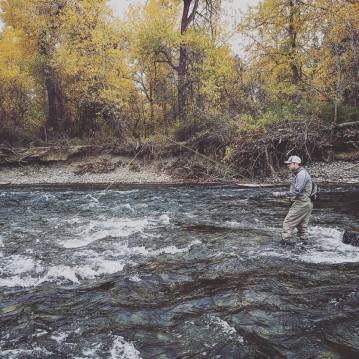
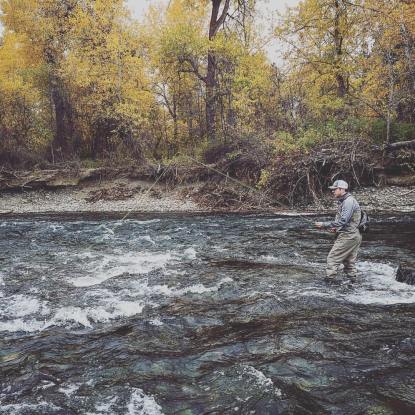
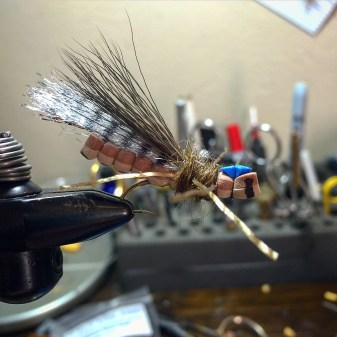
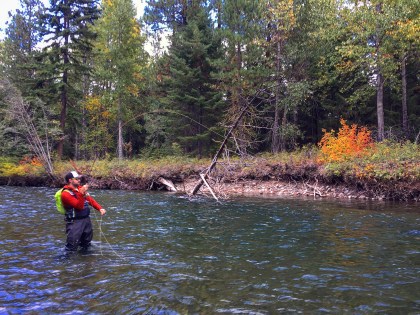 Fishing large dry flies as the light comes onto the river is the preferred method to trick fish in early September. Trout will eat nymphs in the am…but come on…2 nice trout on a nymph are better than 5 on the nymph…at least for me anyway but I don’t chase numbers and I like dry fly eats better than indicator drops. Besides…as that pink sunlight hits the edges of the river through the trees. Long warm shadows against the cool night air clinging to the surface of the river. A slight mist, breath just visible. A deep inhale…as the large dry fly drifts along the seam, touching the light, presenting a dark silhouette to the trout lurking just below. The nose breaking the surface, your breath pushing through the cold air billowing with your excitement. The rod bends, and there is a deep, ferocious, and quite angry headshake from the wild animal who’s morning you just completely ruined. It’s F’ing glorious people, and after 5 refusals from 5 bigger trout the past 20 minutes as the sweet spot of when big fish eat fades; it beats an orange indicator dipping in the morning…just saying.
 Tamarack's Guide Service