Early Season Fishing Techniques

So you’ve been stuck indoors all winter long patiently waiting for the rivers to thaw and the trouts to wake up.  Now that winter seems to be loosening its grip the waiting is almost unbearable.  Some of the more “hardcore” anglers will venture out and net a few fish after spending 3 to 4 hours trudging through the snow and in the craptastic weather.  Mostly we do it because we can’t torture ourselves by just thinking about tight lines anymore and have to put ourselves through some pretty miserable days just for that one moment with a trout…its not called “hardcore” for nothing I guess.  I just call it being a fly angler and I am fortunate that my entire life these days is basically all about trout.

I love this transition period.  When everyone starts thinking about fishing again.  All the guides and shops start coming out of the woodwork, your old buddies that know you are a guide and have a boat call ya up and ask about how the river is.  I’ve been watching this river for 10 years and after the drought and everything that hit us last year I am more stoked and anxious for this coming 2016 trout season than any other.  The early season is a great time to fish.  There aren’t many other anglers on the river, the bigger fish are easier to catch, there are only a few things that trout will actually eat, and only a few places they will be as the spring slowly approaches.  Knowing how to fish in the early season separates the men from the boys, the ladies from the girls, the hogs from the dinks, if you will…or just means you can’t take it anymore and need to stick some trout. 
Riverside

Early Season techniques aren’t rocket science, just fishy science.  Trout are still sleepy, and their feeding habits are directly related to the river water temperature.  When water temps start rising above 40 degrees trout metabolism starts up and they require more food to function.  They’ve been in hibernation basically for the winter, podded up with buddies eating only when they absolutely need it.  Now that things are warming up they start needing more food and another thing starts to weigh on the trouts mind…sex.  Spawning to be exact.  Fish need a lot of protein in order to spawn, which means they need food.  Lots of food.  Soon fish will be gorging themselves on stoneflies, baitfish, small mayflies, and midges like crazy.

Flies. So lets talk about flies first, and start with Nymphs:  The good ol’ Pats Stone is a good go too during this time of year.  Its chunky, looks like a lot of bugs, and is slow and easy to eat.  Boom, pattern one…get to tying.  Midges, those damned little bastards that are typically so small you swear the trout is taking a breath and not eating.  Nope, they are eating size 18 and smaller little midge worms so grab those zebra midge patterns in whatever color you want.  I like red and black with a red glass bead and some silver wire.  I have them in blue, purple, orange, white, pink, green, all the colors of the rainbow.  But for reals…tie up some zebra midge patterns and use them as trailers or just by themselves.  BWO’s or the Blue Wing Olive Mayfly has lots of nymphs patterns. I like the WD40, Psycho Baetis, that damned Tungsten Yeagar Hares Ear thing.  All good for nymphing those little mayfly dudes.
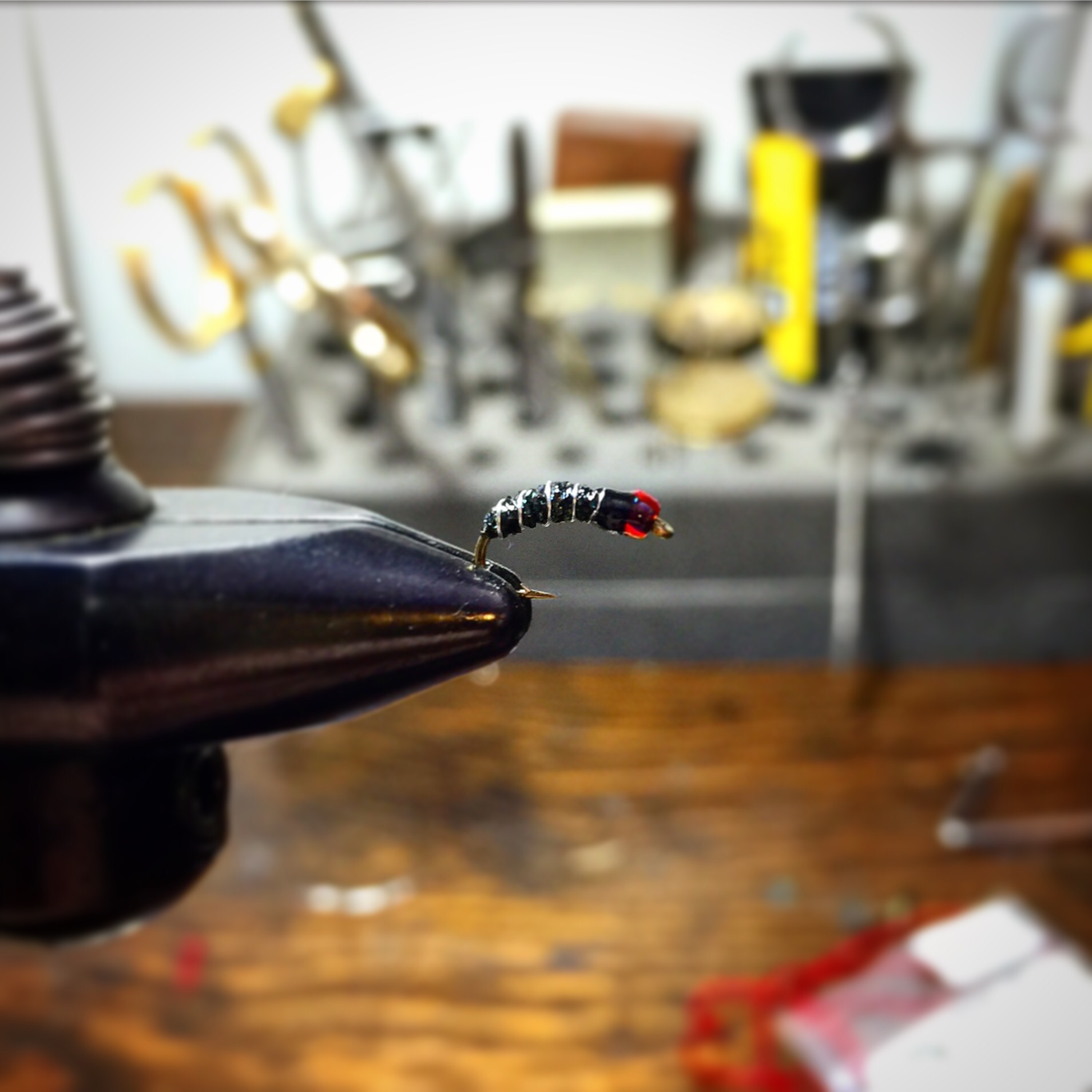
 

Red Head Zebra Midge
 
The San Juan Wormy should always be around during the winter and runoff periods as well.  We don’t like to talk about it, but some anglers go straight for the worm because it works, others hold onto it as a last resort when all the other “proper” patterns fail.  I tend to play dirty, I throw what fish are gonna eat.  That kind of settles nymphs for the early season.  Eggs can also be used but that is playing real dirty and I will leave each angler to their own on that one.

For Dries, if you are wicked lucky you might get a trout that has decided to look up.  They are typically eating one of two things during this time of year.  A midge…or a Blue Wing Olive.  If you see a fish surface and don’t see anything on the water to discern what it may be dining on…its a midge.  I have size 18 to 22 little gnat patterns with wings.  They don’t look like much but I catch the occasional eager eating trout on them.  The BWO should be easy to identify, the little olive mayfly is delicate and hatches in droves typically.  Fish pod up and feed actively when a hatch is happening.  The little bugs also congregate in slow water and fish tend to target them there as most trout are just chilling in the deep part of the pool already.  I use biot body emergers for the BWO mostly.  They have a CDC post, with a light shuck, they work really well.  The final dry is the Skwalla Stonefly. Skwallas happen on some western rivers and they are easy to see and trout hit them like they hit most stoneflies…you’ll know when its happening, and this is typically the official start of the spring trout season. I use bullet heads a lot, and some secret patterns that twitch really well.  All size 10.  Oh, and my go to Skwalla pattern is the Purple Chubby…they haven’t seen it since the summer, and they really want to eat it.  
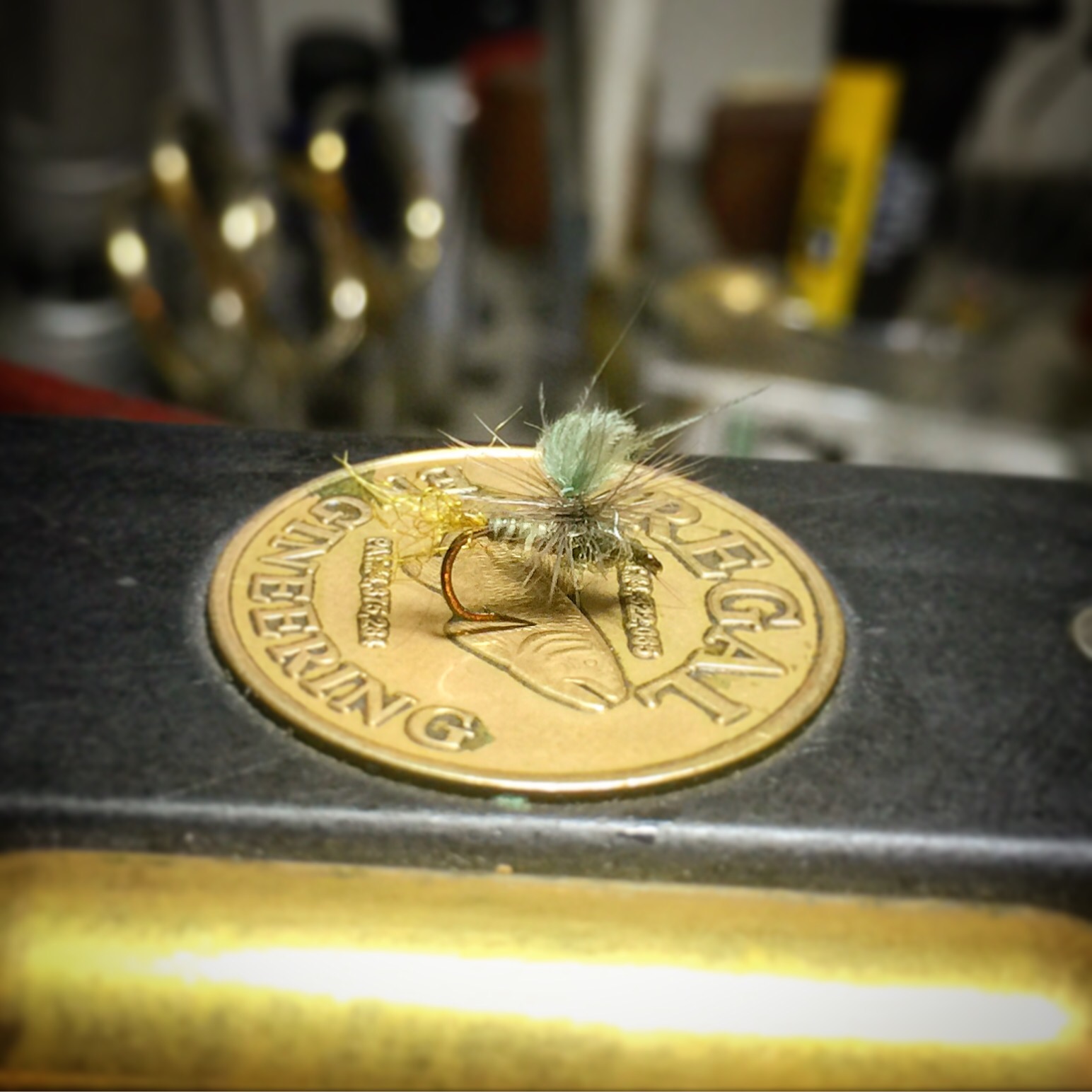
CDC Para BWO

Techniques.  Dries are easy, see a fish rise, cast at it, hope for the best.  When fish start moving in to feed actively on dries look for slow seams, back eddies, and slow pools with foam.  Fish look here and they don’t have to expel a bunch of energy fighting current.  Water temps will typically be around 42-45 when BWO happen.  Air temp becomes a factor as well, bugs don’t like to hatch if they can’t dry out their wings.  Sunshine days, or overcast days with air temps above 40 will set the conditions for those little olive morsels in the early season.  For Skwallas, you know the drill, close to the bank, some twitchy action…BOOM!  Ya…like cold weather hopper fishing, paying close attention to areas where there is foliage overhanging the river, rip rap areas, large boulders, and rocky ledges.  Stoneflies like to hang out there.  So do fish.

I use long leaders, typically 12 feet, for mayfly and midge dry fly setups, with 5x flouro tippet or 6x mono.  The flouro helps with super spooky fish in gin clear water like we have here in the upper yak.  (SIDE NOTE:  All the damn eagles are making the trouts super smart.  Damn raptors.)  For Skwalla set up, the standard 9 foot leader and 5x or 4x mono gets it done.  I put a lot of action on the fly typically.

I recently started using another technique that is common in New Zealand and other areas for super spooky fish.  I shorten up my leader to 7 feet, and go super light on tippet but use a good 15 inches of it.  Typically flouo in 5x or smaller.  Then I stalk up close to the fish, stay low, and make a short single shot cast, no false casting.  I try and keep as much of the line and leader off the water as possible with a high stick.  This makes it so there is little to no line indent in the water surface and little line shadow.  Now, you may only get a shot or two at the trout, but this technique is for those really spooky fish that you come across.  The ones that take 20 minutes to come back into the lane to feed after you make a shadow when making your first cast at them.  Sneaky trouts.  Its really awesome when it all clicks and you get to meet a really surprised and hangry trout.

Techniques for Nymphs.  Well…go deep and work your way up.  I work water like a steelheader.  I pick my run, or my pool, or my line, and I start breaking it apart one cast at a time; covering every inch of it.  Every INCH!  Get after it.  They are in there somewhere.  I look for that slow to walking speed water, a good place to just hang out and chill.  The trout have basically been doing the equivalent of “Netflix and Chill” all winter long.   Just like me.  So look for water that would represent a chill day on the couch for a trout.  Ya…throw your nymphs through there.  I start deep…clears out all the whitefish, and then I work my way up if I don’t hook up after dredging the bottom.  I’m methodical with my nymph game.  I will work a piece of water at 8 feet, 5 feet, 3 feet of depth, and work each 6-8 inch lane from top to bottom.  Sometimes I just pick one piece of water and only work it for the day.  Those trout can only be in a few places in the river, so find the best “trout couches” and interrupt their Netflix session with a hook in the mouth.


The Bugger
 

Streamers!  I use them a lot more now.  I like a nice 4-7 ips 10ft. sink tip and a piece of meat.  I don’t throw little streamers very often.  Maybe a size 6 Bugger or something, but everything else is Kelly Galloup ridiculous big.  Mmmm, big fish eat big “little” fish.  I target the water the same way as nymphing, just swing and strip style.
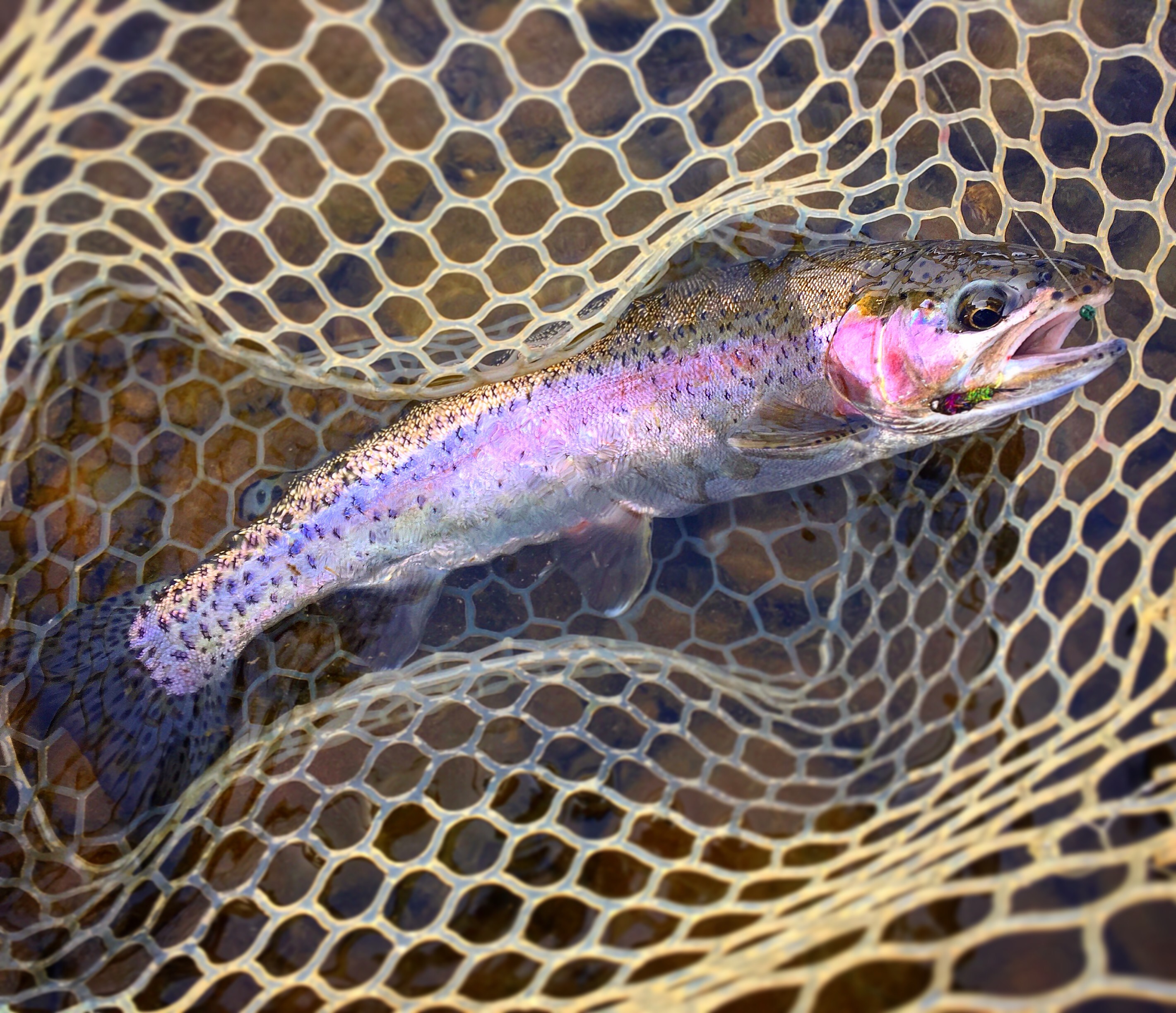
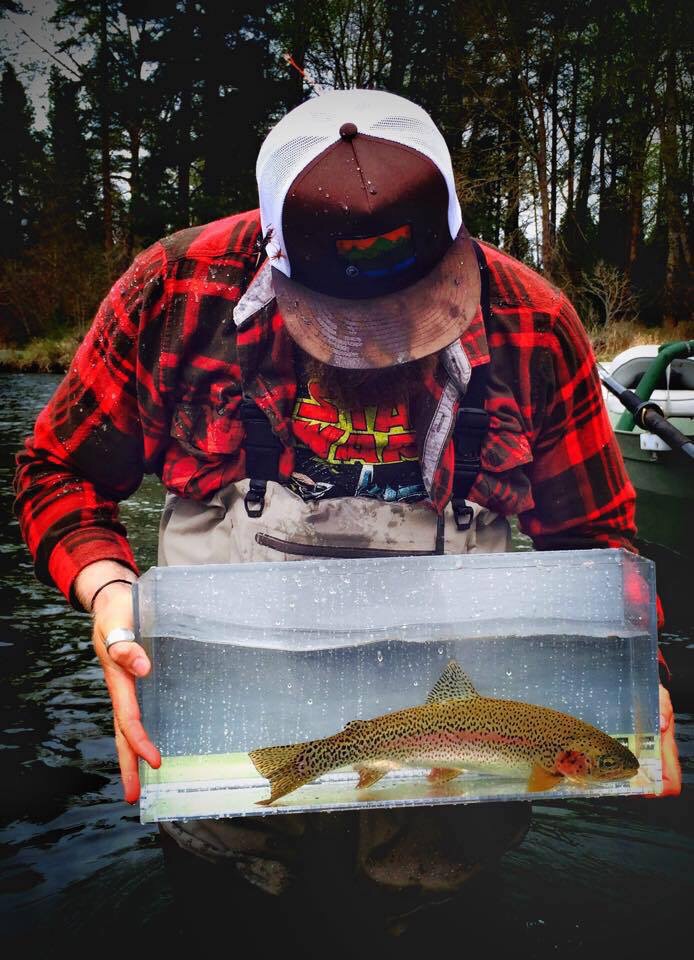
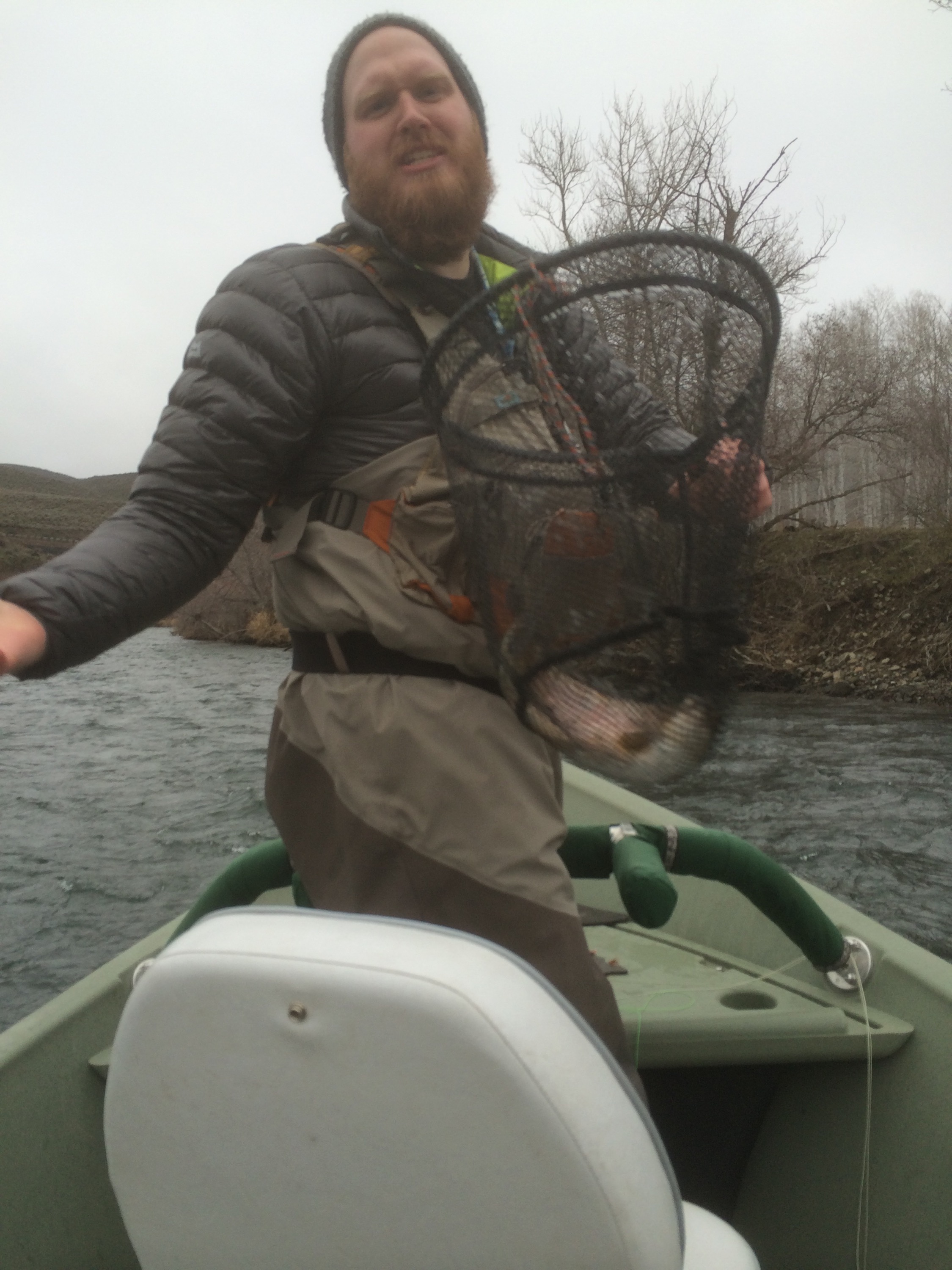
Early Season Bow

I don’t use a boat very often during the early season.  It’s a lot of work when you only have about 4 good hours to fish.  Besides, walk and wading all bundled up and in 36-45 degree water shaves fat in preparation for the coming guide season.  It also gives me the chance to get back in touch with the river after the long winter away.  I may only fish a handful of times during the actual winter if at all.  Once the early season arrives its time to get back into trout mode and being able to set foot in the river a few times a week or every day of the week is how I reconnect.

Being able to stand against the current, casting in the snow, my breath clouding in front of me.  My beard and mustache crisp with frost.  The distinctive sound of a bald eagle’s chirp as it sits halfway up the barren cotton wood, head cocked to one side.  That “shink” sound that the line makes as it travels through an iced over guide…an indicator bobs along slowly…it dips gently…tension…head shake…the pulse of a well wintered wild trout against the rod…oh ya…that’s what I need after a long winter.  

So there’s some early season trout chasing pointers from this trout guide.  Over the next three weeks the Yakima River  will start to wake up along with other western rivers. These techniques should help you have more successful days.  Of course, if you have any questions just ask.  And I’ll do a business plug here:

I’m taking early season reservations now.  Skwalla Spring Special: $275.00 for 1 or 2 anglers.  5+ hours of fishing, hot soup, and some trout chasing with my beardy face.

Get out there and chase some trout.  I hope to see ya riverside this season.


Tamarack
 

Teanaway 

The Sentinel

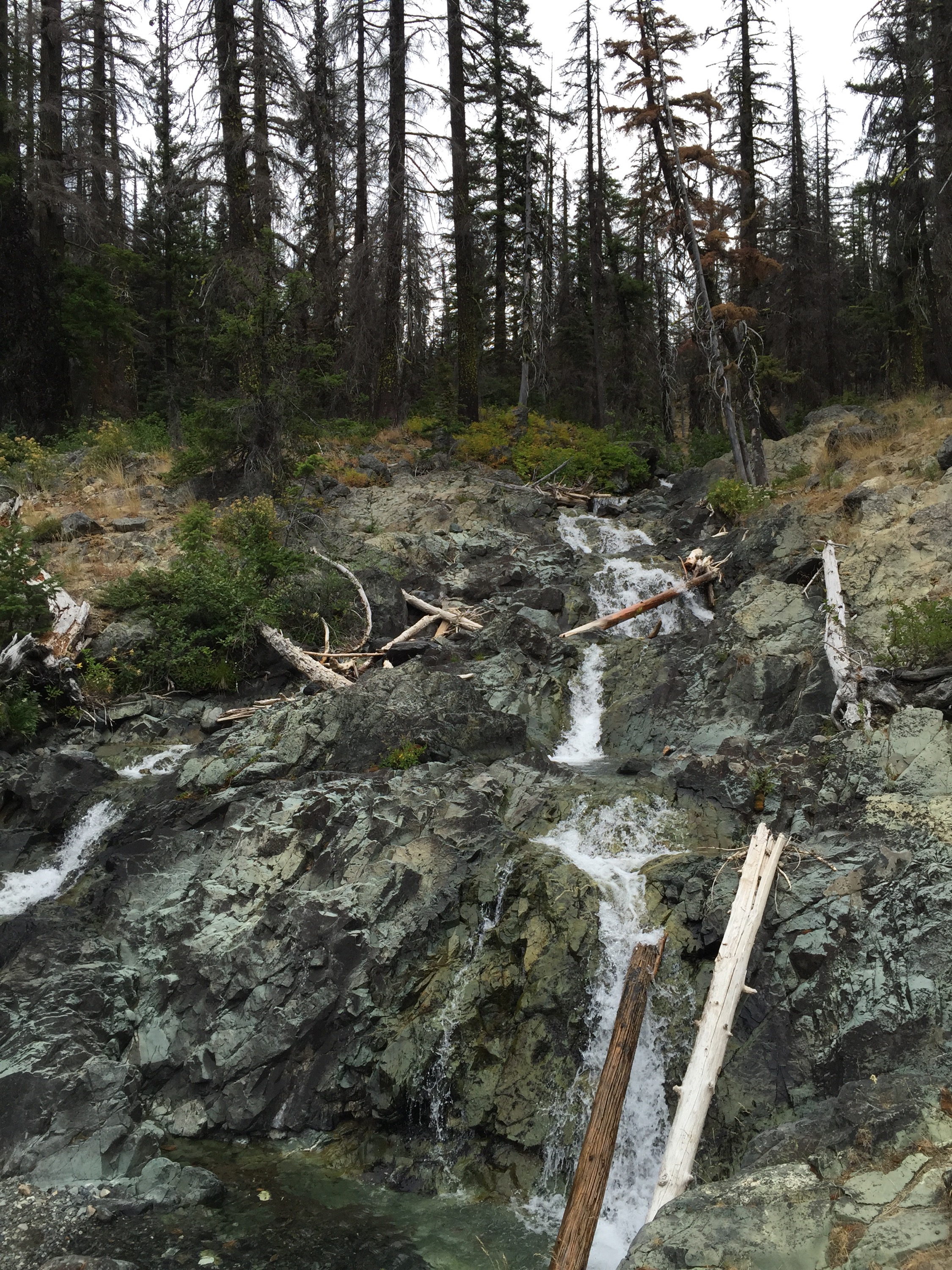
Mount Stuart towers in the distance. Her peak barren of the normal snowcap she wears during the start of August. North Fork Teanaway road straightens out in front of me as I drive towards one of favorite mountain peaks in the world. From her foothills the headwaters of the Teanaway river begins. It flows a torrent of whitewater through granite stones cut deep by her chilling and slicing embrace. Her sound can typically be heard throughout the entire basin if you listen intently on a quiet day in the woods. The waterfalls that seem to fall from the very sky fill the river with some of the most pristine water in the world. The animals that inhabit the Teanaway Rivershed are the epitome of Pacific Northwest Wildlife. With Black Bear, Cougar, Wolf, Wolverine, Samsquanch, Mountain Goats, with hundreds of bird species, deer, elk, skunk, hare, flying squirrel, red fox, and so many more the forest surrounding the river is teeming with life. The river holds some of the most pure species of wild trout in the western states. With Wild Rainbow, Westlope Cutthroat, Steelhead, and Bulltrout, the river system is the last bastion for many species including Wild Steelhead and Bulltrout.

The Source

As I see the headwaters of the river before me my heart is heavy. She is but a trickle coming down the granite mountainside. The pool under the waterfall is waist deep and is full of small soon to be starving trout. As I look at the dried up waterfalls that feed the upper most reaches of the North Fork of the Teanaway I am filled with fear. This river has never seen such a drought. This wild place is on the precipice.


Data Collection
 

I make my way further down river. Checking the water temps the entire time. I am finding normal water temps for this time of year in the upper end of the river however; the flows are a fraction of what they ought to be. When well over 100 cfs is typically coming down this small river in the summer we have less than 30 cfs. I find trout in pools, surprisingly healthy with full bellies. A perfect 10-inch cutthroat decided to say hello and I was reminded of what the term wild really means. These fish, despite the odds, are surviving. By the end of the summer there may only be a handful of breeding fish left to carry on the species. Those trout that they spawn…will be ever stronger. The trout…are doing what they do…being wild and surviving. Life does find a way. 

I make my way farther down river. The temps are warming. Feeder creeks and small tributaries such as Jungle Creek, Stafford Creek, Bean Creek, Beverly Creek, are trickles or dried up completely meaning there is no cold influx of water as the river makes its way to the valley below the mountains. I say goodbye to Mt. Stuart and the surrounding behemoths of granite that the Teanaway cuts away at with every spring and summer run off. The granite stones get a respite from her torrent this year.

Rock Dams

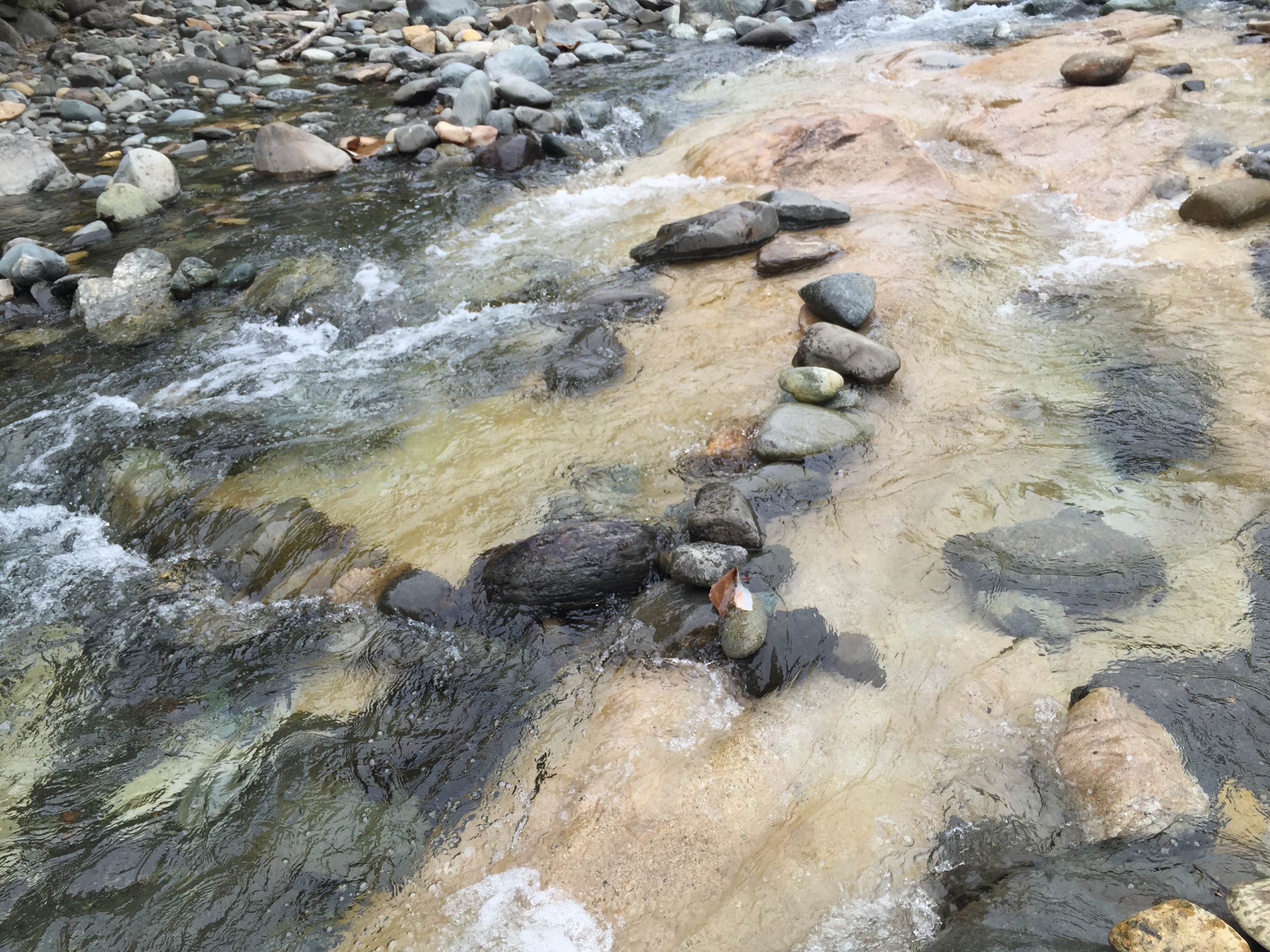
I stop at the famous sandstone swimming holes near 29 Pines Campground to check the water temp. I find a rock dam blocking flow and chuck rocks onto the bank. The river seems to breath a sigh of relief and I count 3 small fingerling fish make their way up river as if waiting for me to open the door. I find two more small rock dams and break them down wishing a sign about how illegal they are in ESA listed streams were present. A TU project for later. I come to the sandstone chute just past the Teanaway Outpost under the bridge. There is 10 cfs going by. I can literally see 10 milk jugs go by a second…its unfathomable. The place smells of dead fish. The water temp is 70 degrees. I find nothing…not even an aquatic insect. It is devoid of life. I leave quickly not wishing to spend any more time in the tomb.

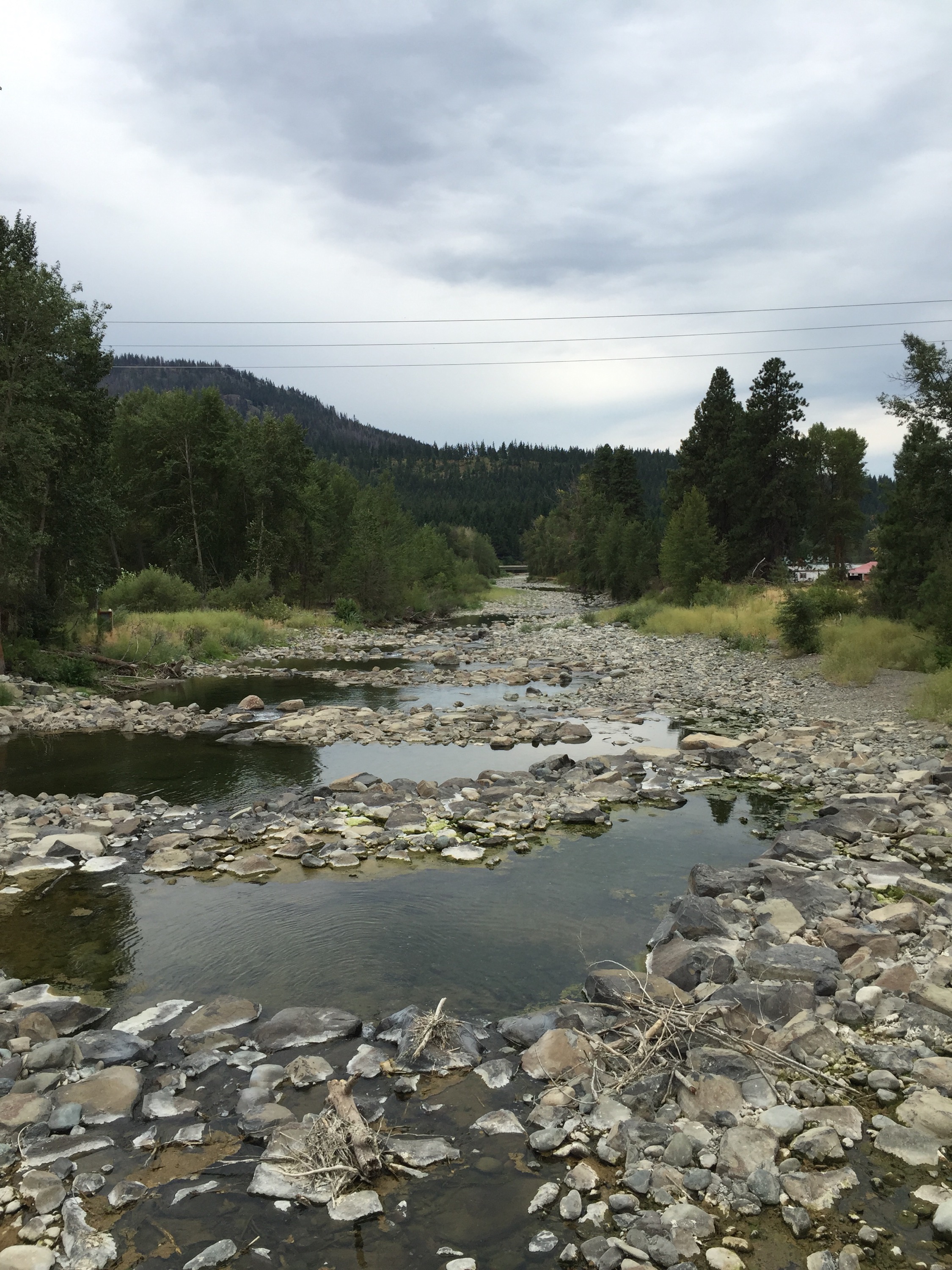
I come to the valley filled with farmlands. Mt. Stuarts’ gaze hidden back behind the hills and trees. I feel that if the mountain were a mere 2000 feet taller and everyone could see the summit from anywhere in the valley…the state of the Teanaway would be much different. The Sentinel of the Teanaway River has been tricked and the river that it has born has suffered. The farms are still watering their fields. A recent stop on all irrigation came to the valley in an effort to save water. The few fields I see getting water must be on wells or finishing up their last orders. As I look at the river below Red Bridge Road I am appalled. Stagnant pools filled with Dart and Pike Minnow, algae, and 70 degree water. There is no flow; the riverbed is drying up in places, if the heat of summer continues I believe the lower Teanaway will dry up completely.

The Lower Teanaway

The Yakima River and Teanaway River Confluence is a stagnant pool of warming water. Typically during this time of year, the trout in the Yakima River receive a shot of cool water for thermal refuge from her sister the Teanaway. Steelhead would have spawned there this spring, as well as trout. Salmon would normally return but they will not have the chance this year. The fish that got trapped in the lower Teanaway have all but perished, those that were able to escape are in the low flow and small cool pools of the upper river farther into the mountains. As the Yakima River water temps increase the wild trout will receive no respite from the Teanaway as they normally would. The Steelhead, Rainbow, and Cutthroat that were spawned this spring are trapped in the headwaters and may not survive the summer and winter to continue the life cycle next season…if the snows come.

The Bulltrout are all but gone now. They have no refuge and have died or hopefully…pushed into the Yakima River and will return to spawn this fall. I have seen a few of those unicorns in the Yakima this season…giving me hope. Visiting the Teanaway today gave me hope. I was reminded of the resilience of nature and wild animals despite the odds and our encroachment. The drought is only one factor in the reason behind the demise of the Teanaway River. The mountains that hold her, the forest that surrounds her, the farmlands that she gives life too…all will suffer as she dries up. The entire valley feels thirsty. A strong rain for days or a wickedly blizzardly winter is needed. But our help is also needed.

If more is not done to preserve and protect the Teanaway River not only will the entire Teanaway Valley and surrounding Forest suffer, the Yakima River below will suffer. As it is a true freestone headwaters to the Yakima River, if it suffers, everything downstream suffers. Headwaters do Matter. More conservation is needed, more efficient irrigation practices, rigorous data collection on the trout required, and some intense habitat restoration is a must if we ever want to see the Teanaway River in her former glory.

Zi-Fi’s 1st Cutty

Some of my fondest memories of angling are on the Teanaway River. I found an ancient and gnarly Wild Westlope Cutthroat in a deep pool. The old trout was so gargantuan it still dwarfs some of the largest cutthroat I have caught out of the Yakima River. My eldest daughter was introduced to her first trout on the Teanaway. My youngest daughter was introduced to her first trout this year before the drought sunk in on the Teanaway. I have a memory of playing in the sandstone swimming holes one summer when I was very young, collecting cased caddis as they crawled along the rocks at my feet. I met my first Bulltrout on the Teanaway River. A story I haven’t shared with anyone to this day save for Tim Irish. That Bulltrout will haunt me for the rest of my life, especially now knowing that it’s genetics and offspring have not survived the 6 years it has been since we met.

Will I ever meet another Bulltrout in the Teanaway River? Will my grand kids meet any trout in the Teanaway River? Will the community forest that hugs the riverbanks become a desolate dried up place that no one cares about anymore? Will Wild Steelhead ever return? Will the wild trout have a place to reproduce and carry on their life cycle? The fact that I am asking myself, and others, these questions leaves me with hope. Hope that it will return, hope that it will be rescued, hope…because the Teanaway River…is a life force; born from granite mountains and winter snows, cut deep into the hard stone, life teeming within and all around her, Mount Stuart standing guard, and people enjoying all that she bares while keeping a caring eye on her.

Tamarack

What is a Trout Worth?


Those who I have the pleasure of taking riverside to chase trout with know, my passion for wild fish, especially wild westslope cutthroat trout, runs very deep…to use the cliche’. I am at home, gliding along the currents, down the seams, through the runs, and around the back eddies of my glorious homewater the Yakima River. My oar strokes sharp and firm, my boat responsive, a sweet drift, a fish rising, the sound of a reel zinging, a smiling face, an ecstatic guide, a beautiful trout for all of us to share a moment with, and a quick and wet release…so that tomorrows’ clients have a shot at it and its offsrping.  

I guide because these trout need our attention. In my experience with the outdoors the only way people will ever care about it, protect it, conserve it, is if they are able to enjoy it. It is our first and most ancient form of entertainment and enjoyment. It is our playground, this planet we take for granted is ours, we are in charge. We are responsible for it. For me I take responsibility for the Yakima River and the wild trouts within her. For others it may be mountains, trails, bears, spotted owls, wild steelhead, salmon runs, old growth forests, deserts, lakes, you name it the outdoors has something for everyone to care about and enjoy. Its how we connect with the world we live in. The real world, not the smartphones, and netflix. Not facbook, and the reality TV. We connect with nature, hell there are even studies showing time in the outdoors is healthy for us.

From seeing a bald eagle for the first time, a big horn sheep, a wild trout, or even a lonely kingfisher, there is a myriad of natural things to enjoy and be entertained with when drifting the river. Its not always about the trout. Sometimes for me I just enjoy rowing the river and moving my boat around the seams and currents, playing with the river if you will. And sometimes I find new ways to fish, new angles, things I didn’t notice or quite see before. I have had trips this season that have very little fishing involved. More discussion and education. Others that were intense days of targeting trout and bringing them to net and enjoying every completely F’ing awesome second of it. That moment with that trout…instills something in every angler…if I do my job right. It also instills something in me every time I reach my net into the river. 

We are at a crossroads with our river. The drought is killing fish, and damaging the ecosystems that we hold so dearly, at a record pace. Sturgeon and Salmon are dying in the mighty Columbia, tributaries are boiling or drying up. Fish are dying…a lot more will die. The Yakima River is one of the only rivers in the west surviving the drought. The trout that we cherish and enjoy angling for, are our responsibility. We trick them with flies, we release them, we continue to invade their natural world, we owe them the coutesy of taking every effort to care for them as if they were our children. Our river is barely hanging on and our fish are on the line people. We must treat our trout with the utmost respect this season. From the 6 inch dinker to the 24 inch hogzilla. Keep these trout wet.  

Is a fish worth a photo? Because that photo may be its tombstone. It may be the last time anyone ever sees that fish. Think about that this season. I am heart broken that I witnessed the death of a prime Yakima River specimen in the Lower Canyon last night. Even doing everything right the fish was over stressed before we even accidently hooked him. Watching a wild trout go belly up and knowing that I was the cause even though I did everything right in that situation was detrimental for me. In 10 years I have had now…4 bad releases on trout. One dinosaur that did not survive the fight in the company of two seasoned guides that did everything they could to revive the trout. Two to deep hooks, and one…to warm water, over angling pressure, and one last drift of the fly. It happens, its part of the gig. You learn, you educate, and you move on and become a better angler.  

These wild trout are precious to us. They are precious to me, and my family. I make my living off of them. I want to continue to do that for years to come, so that one day I can float with my grandchildren down this river and net cutthroat and rainbow trout and share moments with them all. I make my living off of them so that I can continue to protect and care for them.  

Without the trips I take people on and get paid for, I would be unable to continue donating what seems like every minute of my time to them. When my boat pulls into my driveway after rowing 8 hours, I come in, talk about trout with my lady and children, even my dog. I tie flies for the next round, I think about how to better dress a fly to produce more fish in the net for clients. I think about hatches, and compare them to previous years, the weather, the flows, the temps, the stress I am putting on them. Did I just float that section? Yes, so I should swtich it up. Give fish a break. All of that and more run through my mind when I get off river. Somehow in between it all I find time to be a dad and husband, play video games with my son, hang out with my toddler, and listen to my eldest tell stories and watch nerdy movies with. Plus I fish on my own…a lot. Without my clients I would be unable to attend clean ups, take samples of algae, snorkel the river to check on fish, hike into the headwaters and take water temps, remove rock dams, save dying fish, educate other anglers and guides, introduce people to new places, attend meetings about conservation, count fish, the list goes on and on….

I love every damn minute of it people. EVERY MINUTE. I love my life and the type of lifestyle being a guide graces me with. My family does too. My minions look forward to doing shuttles with me in the upper river. They ask me about my fish. They noticed I was upset about a bad trip I had yesterday and we discussed warm water, fish handling, and why these trout need our care. They are 6 and 8 years old, people. They get it. They comprehend it. They appreciate what I do for a living and undesrtand that without proper care and protection they may not be able to fish like dad in the future.  

I have received a lot of heartwarming praise the past few days. I have been called a headwaters hero by people I respect and admire as anglers and people. I have fought for these trout this year and it has brought me heartache and grief, and absolute happiness. The efforts of a few can influence many, and diligence and determination win out. I have the patience of a seasoned fly angler and to date, nothing deters me when it comes to my trouts.  

I applaud the individuals that are making the effort to protect and conserve this watershed. I have to praise Joe Rotter and Red’s Fly Shop for their proactive approach to these warm water drought conditions with a voluntary Hoot Owl for their guide service in the Lower Canyon. This type of action is the management we as guides and stewards for the Yakima River and her Trout can be a part of as a community of anglers. No matter if you work for an outfitter, shop, are an independent, we all can agree that protecting this watershed should always be part of our job. We are doing the right thing with our river and I encourage all anglers that visit the Yakima River to care for our trout and use good angling and fish handling techniques. Voluntarily engage in the Hoot Owl hours and do not fish the Lower Canyon after 2 pm until water temps and conditions change. Take a guide and fish with them and learn about the river and what is going on. Fish for the trout, for the love of all that is holy fish for the trout! A guide like myself, will make sure that when we fish, I am giving not only you, but also the trout, the best experience I possibly can.  

I will continue to run trips on the Yakima River to chase these trout as long as conditions allow. Most floats that are scheuled will be in the early morning until the fall. We do not fish water that is 65 degrees and up in my boat. 68 or 70 may be the cutoff for others and that is within the scientific ranges to be safe. Professionally and personally, 65 is my limit.  

I also ask anglers to be open to other angling ideas. Bass fishing or other species of fish on the fly can be incredibly fun and challenging. I will be offering $375.00 Guided Bass Trips for the remainder of the season. I’m pretty good at tricking some of those greasy bucket and small mouths. Carp and trout lakes too. Even some musky hanging around the basin that we could go for.  

I also call on the Dept. of Agriculture, and especially the Forest Service, to begin considering opening guiding via special use permits to lakes and rivers in the National Forest Service Land for next year. To relieve pressure on our Yakima River and to bring more people to our natural places to recreate, spend money, and conserve, we need professional guides like myself, to facilitate those moments of inspiration and wonder that we all search for when we answer the call of the outdoors.

Thank you to all that have contaced me and thanked me, to those that inspire me, to every single one of my clients this season. Every one has learned about the conditions we are facing and the work we are doing as a fly fishing community here to protect our river. Thank you for taking trips with me and allowing me to continue doing what I do here. I look forward to fishing with many more this season and for many seasons after.

For the love of the trouts,
Tamarack

A few thoughts on tying flies and pattern selection for the wary quarry. 

store and hand tied


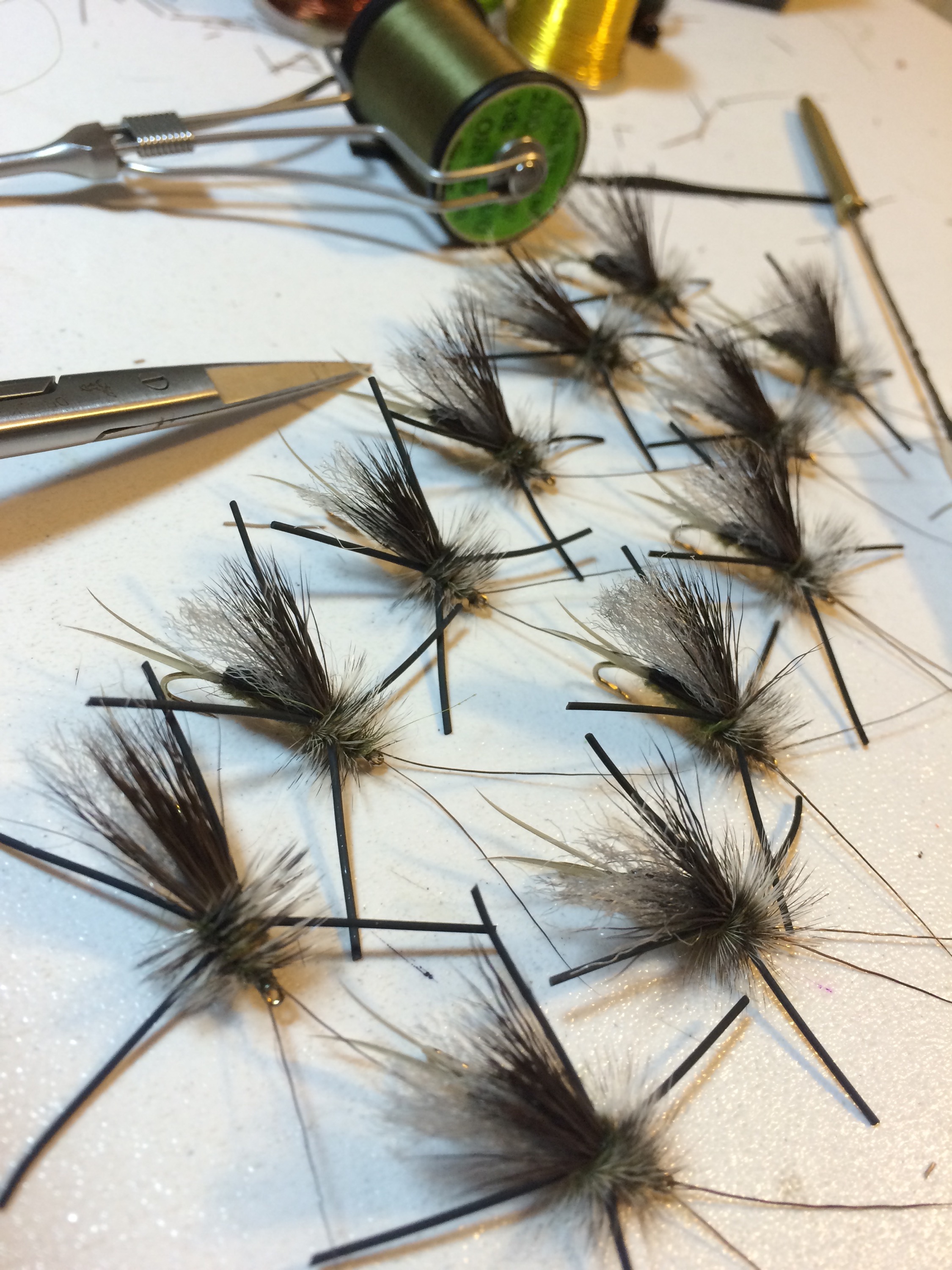
I used to buy flies like a crazy person. I love flies, I would buy a few take them home, tie some that looked identical, and go fish. It’s how I learned a lot of stuff about tying and composition. Deconstructing and recreating fly patterns is how you develop your own as a tier a lot of the time.  

As I delved deeper into tying and studied more literature, trout biology, and listened to my mentors about flies, I began to buy flies less, and tie more. I found myself tying flies that seemed dull and dreary compared to the ones in the bins at the local fly shop. The more I tied with my mentor and worked on patterns and skills with him the more I understood what made a good fly. 

Now, don’t get me wrong, the flies you pick from the bin is totally awesome and it’s gonna work. If you get all the other pieces of the fly fishing puzzle to fit into place that fly is gonna catch the majority of fish in the river just fine. I just found that more and more the flies that manufacturers were churning out we’re getting more colorful, flashier, larger, filled with foam, and Krystal Flash, just Lady Gaga playing Las Vegas looking patterns. 

Did trout suddenly start wanting glitzy looking flies hanging out of their mouths as you fondle them trying to get a good release?  No…probably not. Trout…want insects. Not flies. So why do flies seem to be looking less and less like bugs and more and more like pieces of bloody jewelry for trout to wear for pictures? 

Well tying at that level is commercial and flies are easier to sell when they catch an anglers attention.  Problem is, flies are for trout not anglers. Trout only care about a few things in terms of flies. The better it resembles the natural, the more productive it should be….I mean that just makes sense. Both common sense wise and in terms of biology and science. There is a science behind flies and insect imitation. 

Certain materials mimic natural actions of insects such as angora goat and its ability to create a breathing undulating look even at the smallest level. Which lets face it, a trout is looking at little bugs with eyes designed to look at them under water. As a tier, it would be in my best interest, to tie flies that look as close to the natural as possible, maybe not exactly but imitating those key things that trout key in on instinctually is foremost in my mind when at the vise. 

Color, shape, size, profile. All important. But what about the way Caddis create an air bubble that sparkles under water, a factor trout key in on. Well throw on some Antron and you are good to go.  (By the way, Thanks LaFontaine for making Caddis fishing much more productive through your study of trout!).  There are lots of things to consider and even more material to use to mimic all sorts of things that trout key in on in relation to each pattern and natural. 

Patterns today, for me, seem to have lost a bit of that. Sure a bright orange stimulator with flash out the ass, and big sparkly legs is gonna catch fish, it looks right.  For me though, too many times in my ten year of fishing on the river here; I watch large trouts refuse flies of the store bought nature. Finicky trout are impressive really. A quarry that strikes me two fold: as an angler and a tier. Can I tie a pattern that can trick such a fish?  Because, if all the other parts click into place from cast to drift to proper tippet length, and the trout refuses, what else is there but the single most important thing you need in order to trick said trout with a fly rod in the first place?  

The Fly. 

Fly tying is an art, and the art for the trout chaser such as myself, is in the ability to tie effective flies that trick the most leery of trout. I have spent seasons testing flies. Searching for those finicky trout and testing my patterns.   Hitting hatches with handfuls of different patterns and seeing which ones work best and developing more from there. It’s some of the most fun for me in terms of angling. Having a trout be tricked by a dry or nymph pattern I have tied is that pure moment I yearn for. Some anglers it’s the perfect cast before the hookup, some dudes it’s the big fish, others it’s the perfect Snap T, the perfect take, whatever it is it’s awesome. For me it’s tricking a wary trout with a fly no one else has. The fish that no one has caught, the fish that every one tries for, big or small, I wanna trick it with my fly.  Ya man, that’s my jam. 

Tying used to be a necessity as there was no where to get flies unless you knew a tier.  There are troves of literature and journals on flies from all over the life of modern fly fishing. Going back and finding that many patterns that were the most effective were simple, subtle, and more natural looking. It wasn’t so much about selling flies as it was discovering what made up a good fly and why?  It was about tricking fish.  Guides and writers would sell flies to go fishing and fly shops would buy them until the sport got so big it required mass production of flies.  A little bit of the art of tying died or kind of faded away. 

For me, when I browse the bins at the fly shop I typically end up buying nothing. I just never find anything that stands out to me and I feel that the flies in the bin aren’t going to trick that persnickety trout. They will trick the other trout just fine but that’s not my mindset when angling as much. It’s less about tricking lots of fish and more about tricking those fish that stand out. The one 14 inch cutt that isn’t slashing the surface like all the others. The one sipping instead, maybe it’s been caught before, maybe it has some cool marking, maybe it’s bigger than I thought?  Doesn’t matter, it’s in the zone refusing flies left and right. Let’s see if one of these patterns will trick him?  That’s what goes through my mind when looking for or tying flies. 

When you look for flies at the shop, look for subtle, smaller patterns. Yes a salmon fly dry is a size 6 but when you cram a bunch of foam and flash on a size 8 4X long hook so you can fit all that crap, the fly is huge to the trout. A size smaller is typically a better idea when looking for flies for the larger insects. Look for buggy flies, both nymphs and for dries, but especially nymphs.  A Pats Stone will catch fish and I’ve even got big old steel on it, but for that trout hiding behind the boulder that flashes but won’t eat shit…ya smaller buggier bug, that’s gonna give you a better chance. I test myself on this every time I fish. Especially when working on patterns and fine tuning fly composition and material selection. 

So, if you seem to be having trouble with fly selection and trout not taking your flies, think about what you are throwing and how it looks to the trout in comparison to the natural. If you are unsure, find a trout nerd and ask them. 

The Benefits of a Blog

A favorite for many anglers.

The blog may not be for everyone. In reality the Internet just isn’t good for some people.  It has had an incredible impact on the sport and art of fly fishing. Some positive some not so much but that could be applied to just about anything.

In the days of old, anglers would write journals and newsletters to their fishing club to communicate and promote the culture and sport.  Short stories, books, pamphlets, scientific studies, fly pattern recipes and techniques used to be passed along between a small tight group that spanned from the high Catskills areas of the north east, all the way to the Washington and Oregon coast with a heavy emphasis in Montana of course.

As far back as the early 20’s there are articles and writings about fly fishing.  A wealth of knowledge and insight is there for the hungry angler.  Those that have taken the time to unglue their eye holes from Kamchatka videos, and trophy brown trout in New Zealand stumble on a history filled with just incredible stuff.  I’m super guilty with New Zealand videos.  I do like when I find short videos the are actual pieces of artistic film too, those are just as much of a surprise and treat as good writings.

Any angler that has spent time reading the literature of this wonderful sport will tell you that it was and is a huge part of the culture.  To write and describe the days on the river goes rod in hand with fly angling.  In today’s fast paced world of instagram photos, 155 character posts, and lightly detailed fishing reports there is a part of what makes fly angling special missing at times.  At least for me and many others that I share this sport with.

While some may get bored reading posts about fishing stories, even ones that are filled with trouty information, there was a time that reading…from guides, tiers, writers, conservationists, and trout bums, was the only way to get information, news, new patterns, techniques, secret fishing holes, and just about anything fly fishing related. Published magazines and journals, large networks of fly fishing clubs with members across the country sharing newsletters and writings through the club; all of these were the staple for gaining knowledge and insight into the sport.

Nowadays, those things have changed, blogs, twitter feeds, facebook posts and websites are how we gain info.  Which is really cool, trust me I love tech!  What I love about blogging is it allows the passionate fly angler who happens to enjoy writing and sharing things, a new age avenue to do an old school thing.  As the season begins this spring, the major benefit of a quick to publish blog is river reports.  Now a quick photo post or a short few paragraphs will be the normal thing as there is less time for writing, because of…fishing.  But there can be troves of information and tools for the angler hidden with the “foofy” words that some anglers use to promote the sport.  Writing is an art form in itself and I learned a lot about this sport through the literature.  I identify with those artful passages from equally artful tiers and anglers.  Its nice to slow down, have a read, and learn something, or just enjoy a good fishing story, or maybe be inspired to fish somewhere or with someone.

Some who fly fish may not be into it, and that’s okay, we are all fly fishing for our own reasons and express our passion in our own ways.  I have found that over time, there is more to just being on the river. For some anglers it “clicks” early, others it takes time to develop, and for some, fly angling is just an enjoyable hobby to do from time to time. We are all angling and that’s pretty wicked.  Part of the culture of this sport is learning and talking with people in the shops or riverside and hearing about their story, their journey down the river.

What I always look for when reading river reports or looking for information is the stuff that isn’t just, the flies used, temps of water, where the fish were, and how many were caught.  That’s great and all, and when you are trying to sell trips in this age of the simplest information at the fastest speed possible to the public, it works really well.

When I stumble upon a report or blog that goes the extra mile its like having a surprise hook up on the river when you are sleeping on the drift.  Something that talks about the sounds heard, the sights seen, the intricate way the fly bobbed along the water before being hoovered. Or the eagle circling above that is watching the same fish you are. The elk that bugles in late fall and wakes up the river in the morning. That troutnerdy stuff.  Those are the blogs and posts that grab my attention. Ones that, as I read them, make me feel like I am there, ones that inspire me to find a similar moment on my homewater. Those are the websites and places I frequent.  Those are the people that I connect with over the ‘webasphere’ and its a neat thing to be able to share passions and stories with others like the old days, in the new age.

So for those anglers that share in the delight of reading something more than just a quick report I can dig it.  Passion, makes everything better, passion in life and in angling.  There is never anything wrong with reading, and fly fishing has a long history of great literature to go along with it.  I always tell people to read, read, read.  That’s what off seasons and off days are for. Reading and tying.

Do I hope that one of my posts inspires an angler to come fish with me. Of course, but I would write anyway.  Its fun, and the above mentioned hope has already become a reality for me personally, with people that are inspired and want to share moments with trout and me.  Its a cool thing, to have people want to fish with you.  Granted I enjoy solitude very much but there is a time for angling solo and a time for angling with others.  The trick is to find other passionate anglers that dig it as much as you do, those are the ones that make those riverside days that much more memorable.

Its not always about the trout when it comes to fly fishing.

Tamarack

The Subtle Take

IMG_2373

The season seems to be upon us. More or less. While the river temps are rising a few tenths of a degree everyday with this lovely weather we are having, the winter as a whole seems to be on its way out. With forecasting models showing the same issues with pacific ridging and all that cool sciencey stuff that is making anglers swoon.

I took a look at the Cle Elum today, running around 272 cfs and the water was around 42 ish. I looked for nymphs under the rocks near the banks and found a few, nothing major. I also just took the time to watch the areas that always have fish this time of year. There were a handful of trouts feeding under the surface. Most likely midges as there was a pretty good hatch. Nothing on the surface in my observation but thats pretty normal with 42 degree water.

The season is approaching however, and the all to familiar and always awesome sight of driftboats with trailers lining mainstreet in the am is becoming more regular. Of course right now its usually like 1 driftboat. I took the afternoon to wash mine out. Was really dirty from the winter. During which I never clean her because well….its kind of a pain. Luckily my big plastic bath toy cleans up real nice. I love getting things ready for the beginning of the season. My birthday is this month and the Skwalla hatch usually coincides with it or a week after. I typically celebrate turning a year older, this year 29, by hitting the river for the day. This year will be no different and the dry fly fishing could be wicked. That is if a trip doesn’t get booked on that day, in which case I would just get to float another day that week which is never a problem.

This blog post is gonna plug the fact that I do offer guided fly fishing trips. Kinda sucky but I have already learned that these posts have a positive effect on the calendar dates filling up without having to outright say it so there it is. I just said it now lets move on.

Cool fishing story to end it all off from a birthday of mine a few years back.

Before I had my driftboat, I used to walk up river from the East boat launch outside of Cle Elum a lot. I just found there were less people and easier wading. Plus a lot of just killer water. Downstream is great too but thats another story.

It was on my birthday, and we had a really warm spell that led us into March. The dry fly fishing in the canyon was really starting to pick up, with almost 60 degree days of course it was. The upper river however, was slow to get going. Which is pretty normal. While everyone and their dogs crowded the lower river for a chance at a fish on the dry fly; I was more interested in a big fish on anything and I knew just the spot.

I don’t typically care for what size a trout is just as long as I get to chase them and trick a few. But, this particular spot and I had our runs ins and I always found decent sized trout in it. I was in the mood for a cutthroat but had had a moment with a few already for the day on the nymph. I came up to the spot and took a gander.

The sun was grazing the tree tops with her orange late winter hue. The shadows upon the river like jagged teeth closing in for the night. The light was touching the far end of the slack water at the front end of the hole and a foam line was just visible. A good 35 40 feet away from me with the breadth of the river and at least two different current speeds. Then…I saw it. Only just at first.

A nose….

Not just any nose…a nose and head around the size of my fist! Another sip!

I saw the trout rise a third time barely breaking the surface tension of the slack water. My heart panicked. I quickly switched out my rig and set up for a dry fly. I gave myself a nice long piece of 5x supple flex tippet and tied on a size 18 midge dry. One of the ugliest flies I have ever tied. Nothing more than a few strands of snowshoe rabbit, black thread, and some sparkle yarn for a tail. You can’t see the fly without really spending some time watching it on the water as it is so small. Rocky Ford in the early days was helpful.

The trout rose again. I made my approach. I stayed well down stream and kept my cast really low. If I spooked this fish I would never forgive myself. A rainbow that size is always a treat in the upper stretches and only a rainbow would sip so stealthily and delicately in this river.

The cast was quite difficult and left little room for error. I figured I would F it up big time but I gave it a shot.

Now before we finish this tale of trout versus angler we need to have a disclaimer. What is about to unfold….never happens to me…like in ever, and I have caught a lot of finicky Yakima Trout.

I gave three perfect false casts, and I mean perfect, that line just cut through the cool late winter air like warm butter. I remember the distinct sound of my Mastery Texture Series line as it sung through the guides. Zip…Zip….

I placed the fly 3 feet upriver from the infamous snout. I held the rod high, which I thought would be the end all, but with the cross currents the only way to secure a proper drift with such a fly made it necessary. Everything went silent…

My vision seemed to tunnel on the spot where the trout had rose before. I took a deep breath and held it in anticipation. 6 more inches…..

Whether I was blessed by the fly fishing spirits, my trout sense was in perfect sync, or I just got really bloody lucky that trout rose.

The snout broke the surface and I watched in sheer joy, horror, and the utmost excitement, as my fly, the size 18, fugly little midge gnat, was hoovered by this trout.

It was on. This trout was in no mood and I very much angered him by interrupting his late afternoon feeding. The head-shakes of this trout put fear into my rod. My reel screamed against the silence. The calm intensity of the prior moment was now broken with chaos and pure awesomeness. The fish leapt from the river and I got to witness his prowess. An immense trout!

The trout was not giving up and continued to work its way into the deeper water where I knew a rootwad was waiting for me. A high rod tip and a well played fish were all that was needed. Easier said than done. Like I said, I got really bloody lucky. The Wild Rainbow found his way into my net. I was amazed and dumfounded. 22 inches of pure awesome in trout form.

I pulled the fugly fly from my quarry and released the fish who said goodbye with a splash as if to get back at me. I was done for the day. I tipped my hat to the river, said thank you, and made my way back to my rig. There was nothing else in this river that would top that fish for today.

Just to see and chase such an impressive trout is an experience, but to actually have everything click into place and have that perfect first cast moment that tricks the old, sipping, rainbow is damn near…I’m gonna use it….Legendary! At least for me. Its just one of those moments that will go down as one of the greatest on this river for me, and it was on my freaking birthday!

I hope to share moments like the one with Mr. Subtle Take Trout, with my clients. I actually named my boat after that particular trout, and have “The Subtle Take” engraved in my transom plate in the back of my boat. Take a look if you are ever in the hog this season. We might even be floating by the same hole, and there are always decent fish in it.

Tamarack

#yakimariver #homewater #trout #flyfishing

Trout Nerd

IMG_2353

Trout Nerd. Or Troutnerd. A term I use for myself a lot. I feel that I am that weird dude of the group that is way too involved with fly fishing and trout. I really get into trout and how they tick. I watch water temps, seine the river around the time the hatches are supposed to happen to see where the river is at in terms of food. Flows, barometric pressure, weather systems, and all the stuff, I just like to know whats going on. Even if I am not fishing. That way, if I run into someone who is or was, or wants to go, I know what to say.

I like to snorkel places during certain times of the year to watch what fish do. I like to see how many fish are actually hanging around too. Not always to catch them, well okay I am always trying to catch them, but in reality I also want to know just how healthy the river is. Especially the upper stretches. Places that are easy to walk and wade in the summer and take a mask and go check out the fish. It gives the angler in me more insight, but it also lets the outdoorsmen in me educate myself on the river. I especially like watching the salmon come in and how the river reacts. This past season was very fun as the Sockeye were more present in the upper river than I have ever seen. Our wild trout key in on this migration of zombified fish, that instead of flesh to eat, just want to get it on.

Watching salmon make the trek from the ocean, even hatchery fish, is still quite neat, but watching how these wild trout have benefited from them is even more interesting to the nerd in me. Huge populations of our rainbow and cutthroat move in behind these fish and feed on eggs and flesh. Always being mindful of redds the fishing can be rather spectacular, while you may throw eggs to them a lot, the sheer number that follow them up makes the dry fly and nymph fishing throughout the system super sweet.

Snorkeling in the upper river watching lots of 16 inch, and a few quite a bit bigger, rainbow feed on salmon flesh floating down river was pretty wicked too, catching them on big gray bunny leaches was awesome. I would have never thought to fish then or even know the large rainbows were in there without doing a little research and discovery for myself. It helps in all aspects of angling and only makes you a little crazy.

Simply taking the time to watch the river without chasing trout can be beneficial. Sure it makes you nerdy, but when you do have a fly rod in your hand, you are that much more in tune with what is going on. Being in tune means that those who are fishing in the boat have a better day on the river. Like a tuning fork, keeping everyone on pitch, with the river.

The other thing that being a troutnerd does is it gets me super excited about fishing. Good energy and vibes can make a slow day go by better, and a great day freaking awesome! Sometimes you gotta sing to them trout, get them to come into the boat. Other times they require really intense focus, a different tone, a different pitch. Setting that up is half the fun of fishing with people and being a guide. I get just a big a kick out of tricking a trout myself as having other people trick one. Especially with me on the sticks. When a friend is fishing in the boat, or client. When they trick a trout and the fun begins, it means that everything just clicked. The position of the boat, where the trout was, where the angler put the fly, the read, the drift, the take, the set, the anchor, the net, and the release. It all comes together and that’s what fly fishing is. All that stuff, that trout nerdy stuff that I can’t get enough of…it all syncs together, and we all share a bitchin’ moment with a trout.

Tamarack

Homewater and The Kid

IMG_2319

The river is not without the need of care from those who embrace her. Whether it be the family that swims and plays along her banks, the angler fishing from the boat, the farmer who uses her water for crops, or the hundreds of others, she always needs to be cared after.

An interesting thing happened today. I volunteered to help with my local Yakima Headwater Trout Unlimited Chapter’s River Clean Up today. We had a great turnout, more than I was expecting to be honest. A clean up in February and the wonderful rain, is not always on everyone’s awesome things to do today list. It was on mine however. I checked in at work, took the rest of the day off, and gave back to my Homewater.

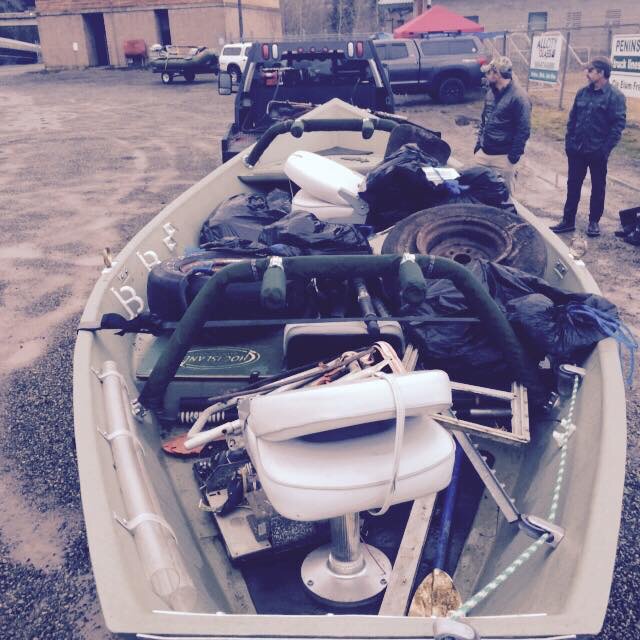
The interesting part about the day was at the end, the amount of trash piled into my boat on the very small section of river we cleaned was immense. Two fellow anglers and friends, and I hit the Cle Elum River, a favorite of mine. My entire drift boat was filled with trash. Beer cans, glass bottles, discarded rafts, an old projector, tires, wrappers, needles, gas cans, oil cans, jugs, MOTHER F’ING WATER BOTTLES!

People! It’s called a bloody NALGENE! Its like 10 bucks, you fill it up with water, hell buy a bottle of water and pour it into it for all I care, just don’t put that water bottle in the river! Buy four bottles of water and you almost pay for a nalgene, get one with a purifier in it and guess what?! You can put TAP water in it and its clean and safe to drink. Or just drink tap water like a normal person….Oh, shit, sorry…I have this thing about water bottles. Don’t get me started on ones that are filled with pee.

Where was I, cough…right.

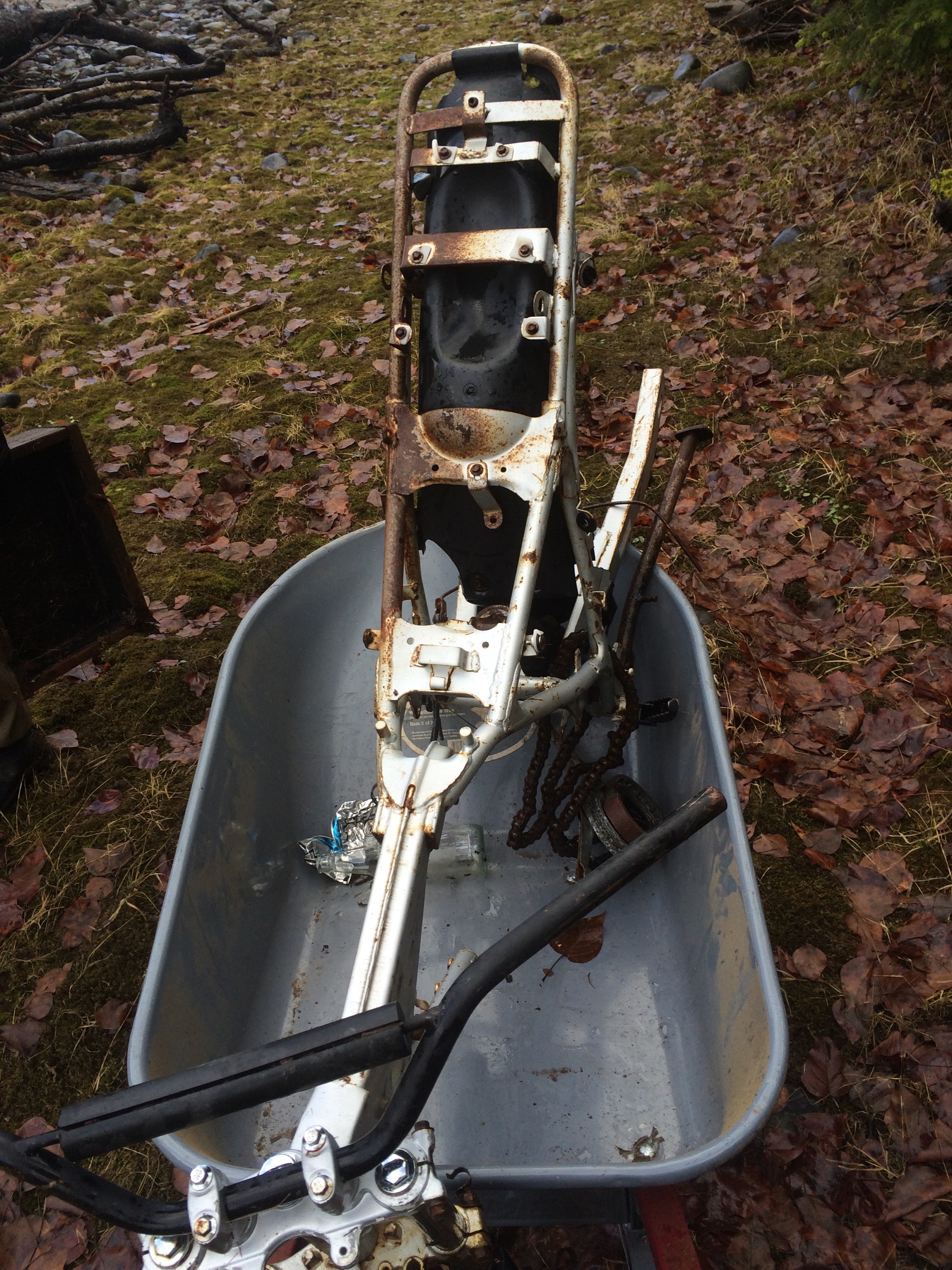
We were one of the last crews to come in and everyone was waiting to see if we got the motorcycle out of the river. We did…the bastard. I’m making a trophy out of it. But what everyone was looking at was all the trash and junk in the back of my boat, no one even noticed the motorcycle strapped until a few second later. Way too much garbage. In fact…its quite shameful. I shared the photos with a few community members when I got home.

Their faces said it all. Complete disbelief and even a little shame. Everyone who lives here knows that the Yakima River is here. It is, in fact connected to everyone here in some way. As a local I was embarrassed. Especially after I saw a good friend and mentor looking over the heaping pile with a rather distraught look on his face. When I got a good look at it after everything died down, I’m sure I had the same look on my face. We, or at least I was disappointed in myself for allowing this.

Such a great things to have all that trash, junk, and people’s general lack of decency, out of the river and stuffed into and piled around the dumpster. But such an eye opener and a reminder. A reminder that the river needs care. Something that I will be engaging in more and more, and getting more people to become a part of.

Moving on to a fishing related short that also happened today.

We were hefting this bloody motorcycle with a wheel barrow, backwards, up along the river bank, and through the trees to the truck, and there is this kid fishing in the river. When I say kid I mean kid, teenager maybe not old enough to drive, not sure doesn’t matter. Dude looked like he was a teenager and that was enough of a surprise. His dad came and picked him up from the river, which I think is awesome! Here’s why this kid is so rad.

The Kid, as he will be referred to as it is a cool title in the fly fishing world.

The Kid is there flipping his rod through the air like a freaking champion! Like a Champion! His loop is tight, his backcast is timed just right, the loop rolls forward smooth with only a slight little dent in the line, he drops a little early, but he compensates with a little half tug of a haul and lays the fly out basically perfect. If he was in my boat, that cast would catch fish all day long!

As we were walking to get the damn motorcycle, I mentioned to my fellow angler, that he was fishing the wrong water, everything about him screamed brand spanken new to fly fishing! I love it! People may get down on those just getting into this sport. I had a hell of a time at first, especially with shops. I look at new anglers and see myself, I see my kids, I see someone wanting to do something that is completely pointless, catching trout has way easier methods, for some strange reason within them they want to do it with a fly and rod. It’s called being a fly fishermen.

As we are hauling this bloody motorcycle, back past The Kid, now throwing a nymph with a huge indicator. Way too big, sorry Kid, my bad, if you are reading this, I should have given you a few of my smaller ones but I totally spaced. I called over to The Kid and asked if he wanted some advice or had a question? He seemed interested in us anyway. Yes we were critiquing you, and no we were not making fun of you. Quite the contrary. The Kid gave a yes answer.

IMG_2307

We finished moving the god forsaken MOTORCYCLE, and I grabbed my gear and headed back down to The Kid. I was super anxious to help him out and maybe see if he could trick a trout. He was close to some areas where we spotted some feeding. I rigged up my stuff and kinda watched him for a bit. I am sure I made him nervous. His cast needed no help. He just didn’t know where the trout were, which is totally cool, hell half the time I spend half the day trying to find them, especially in the winter. I introduced myself and shook his hand. A teenager that shakes hands! Holy Shit The Kid is awesome! I asked him a few questions, and then complemented him on his cast. He seemed pretty surprised. I began briefly explaining where the fish would be holding, pointed out the few things to look for, and gave him a few tips for his fly set up. He had a great double rig on, rubber legs and a mayfly nymph, red, small, good choice for this time of year. Shorter tippet, better weight placement, and boom, ready to go. Sometimes its just a few simple tweaks to fine tune everything in, and things will work.

I love handing out flies, its just something I do. I gave him some sqwalla nymphs, he knew what they were, YES! The Kid did some homework! Handed him some dries, a few Salmon Fly Nymphs for later in the season. He thanked me, and I gave him my phone number, told him give me a call if he ever had a question. Call means text nowadays. I gave him my website too, told him I write some stuff, people read it, might help. Ya know, throw it out there.

Went on down river to chase my own trout. We had a nice winter stone hatch during the day, saw a few fish on the surface, a few flash under, blue wings here and there, nothing major. It’s getting there though. Not seeing a lot of nymphs out just yet, but we are close.

I love meeting new people on the river. I got to meet two new anglers with the clean up and The Kid was an added bonus to my day. There is a lot of great things that can happen riverside. The Kid got to see that today. He saw a team of guys cleaning up the river, he met some fellow anglers that shared some knowledge, got some killer flies, and made a contact in the fly fishing community here. I, got to give back to the Homewater today, meet new people, and see The Kid, who could have been at home watching netflix, playing video games, or whatever they do these days, mine are still young so I don’t know yet. Instead, The Kid was casting a fly rod, like a champion, in water ankle and knee deep, in February, chasing trout. There was A Kid, that stood in the river up to his waist, near Ringer Loop, in February, casting a fly rod like a noob, chasing trout; wow…10 years ago this year, I shared my first moment with a Wild Yakima Rainbow Trout. Cheers to The Kid. He’s got a wicked cast, and a whole river to explore…its a blast dude, let me tell you…its an absolute blast.

Tamarack

Elder Trout

IMG_2283

There is a river. It cuts through mountains and carves out canyons. Its belly swells deep into the rock, slowly growing deeper as it ebbs and flows with each season. There is a river. It is powerful, relentless, and mysterious. It breeds life, it shapes the earth, commands its world.

Where there is a river, there is a trout. Where there is a trout, there will be an angler. This particular trout, was high in the mountains. The king of his pool. The largest fish in the upper reaches by far, his genetics raining supreme in the volatile world with which he was born. A fish aged and strengthened by the furious river that tugged at his now tattered fins and scales. A solemn trout, a solitary trout, a trout like no other trout. The trout that could only reside in such a pool, in such a river, so high up into the wild where no trout was thought to be.

Where this trout resides is seldom visited by an angler, and an angler would have to walk the blue unnamed lines of the map to find such a place indeed. This place could be on any map, but for each angler that understands, there is only one map, one blue line, one mental note about the location of such a place. No markings on a map unveil it, no names befall it. It is unknown, but known, to the few that know, and it is held in secret to all but a few in a lifetime. The lucky anglers have a few maps that have unnamed and unmarked blue lines which hold the above described secrets. Whether through self discovery or loose lips, these places are discovered and forgotten, rediscovered, and lost. Fished 20 year ago and maybe a few luckily anglers stumble upon it once again. It happens in even the most popular of fly fishing areas.

The joy of my homewater, is that the area for which many of my maps belong to, are within the glorious National Forest and Alpine Lakes Wilderness we have here. A little taste of the wild sandwiched between the west and east. The edge of the Cascades. An angler can hike and fish to their hearts absolute content here. Stillwater and trickles, creeks and streams, rivers and lakes, ponds, and backwaters. Its all here, and it is ever inviting to the lover of mountains and woods, and rivers and trouts.

My solemn, solitary, trout that is like no other trout; lives here in the upper reaches far up river, into the mountains, away from the world and off the trail. A solitary pool, near a mountain waterfall, hidden behind the woods and the folds of the mountains. A blue line barely graces the map near the place of which I speak. Such a special place, unlike any other I have ever witnessed. A place of birth, of life, the very roots of the homewater, with the ancient roots of the trout that populate the system below. The trout lies there for me. Chance and bordering on truly being lost brought me into the embrace of this place. The trout that should not have been. There…feeding…on the surface…

Silence….

The rod in my hand felt heavy from the hours of casting before happening upon this elder of trouts. Nothing but the sound of the falls and the forest were present. The surface broke as a mayfly was delicately plucked from under. A slight ripple and a slosh of surface water broke the silence. The heart syncs with some unknown rhythm lost in the fray of mobile phones, freeways, and crowds of people…civilization. The cast beats the rhythm…one…two, three…four. The feel of fiberglass and line whipping through the air just a few feet more. “We don’t want to spook the trout.” The worry of hooking a large trout on small tippet, and a 3 weight.

The drift falls to far right and the fish feeds on a natural in the correct lane and not the imitation 6 inches off. The tension is quite intoxicating. “Will another cast spook the fish?”

The cast falls correctly and the fish rises to the fly, only to refuse it.

One final cast, out of respect. “I tell myself this fish deserves to be left alone should it not want to share a moment with an angler today.” The cast places the fly upstream for a longer presentation to this old and smart trout. The fish rises…rises….rises, and refuses once again. The angler in me desires one more cast. The human in me disagrees. This place will be left undisturbed after my retreat, and I will be able to find it once again.

But…the angler in me always gets the better of me. I would not be a fly angler if it did otherwise. I leave the pool and give the fish time. The hatch is early, the sun is high, and the trout is withholding. I rest out of sight but still have a watchful eye on my quarry. I enjoy a smoke while writing in my journal of the place I am in and the awe for which it deserves.

The sun gives way and begins to touch the tree tops. The trout is feeding once again. I give him a wide birth, staying low and down river. The pool just large enough to cast across, but the trees behind made a proper cast quite impossible. A roll cast would surely spook the creature once again. A steeple cast was not a desirable solution either, but presented a higher chance of success as the shadows were in my favor. Waiting for the fish to stop feeding in between the drifts of the naturals presented an anxiety filled moment that seemed to last ages.

The window opened and a high cast laid the fly slightly off target but without spooking the trout. The fish rose but the fly was too far out of the lane. “One of the most finicky trout I have ever had the pleasure of meeting.” A slight breeze rippled the water and a large swath of naturals began floating down into the pool. “The trout may have been withholding but the river, was not.” Another cast and a perfect drift was granted to me. The fish rose and my imitation was in position….Silence…

I could feel my fiberglass pulse with the thrash of the trout. A surprise to us both, he by the imitation that foiled him, and I by the disbelief and amazement that I actually foiled him! “A quick but enjoyable struggle and the ratchet of my click paw drag was F’ing nirvana dude.”

The Elder Trout, was in my grasp. The trout and I shared a brief moment while holding him there in his pool…his lair…his ancient castle high above the river below. A Wild Trout that resembles his ancestors that lived in this river before Lewis and Clark met the Yakima where it enters the Columbia. Before the native peoples that lived off the river that this pool resided over high in the mountains.

I paid my respects to the trout. Released him back to his dominion and thanked him. I still visit his castle from time to time. He is long gone, I found him seasons ago while discovering the secrets of the mountain streams. Other trouts that resemble him reside there now. It has been several seasons since I was there. A visit is in order, with a fiberglass rod and a box of flies.

Tamarack

Snow…what’s that?

IMG_2279

A topic that is floating around the fly fishing community here on the Yakima is Snow. Not typically something that fly anglers talk about as we just want it to leave so we can get to spring. However there has been very little snow this year. Checking the snotel sites of the high country we are looking at some of the worst numbers in the past few seasons for snow. This means a lot of things for anglers.

The river flow here is controlled by two things. Nature and man. With dams that hold water back for irrigation that helps grow the hops, grapes, wheat, pot, and of course hay and all that other great stuff, anglers are blessed with a river that can be very consistent during the prime angling season. While the issues of dams is not the topic here I support dams and also their removal. I come from a family rooted in the agriculture industry and lived a good chunk of my life in an area that feeds the majority of this country in the Columbia Basin. I see dams as one of those necessary evils in many cases but also love when we as a species can remove our impact on our environment to help let it return to its natural state.

The dams here help make this fishery what it is today. No question about it. These small dams that hold back water to create these large reserves are always in the back of mind when the season begins. With our dismal snow pack and our extended forecast looking more and more like spring, it seems that snow isn’t going to happen. This means that when we get our normal snow dumps in the late spring and early summer above 5-6000 feet, the river has the potential to be a very different lady come this season.

Water will more than likely trickle out of the dams all season long to help keep the levels up for the growing season in the lower valley. This means low flows, warmer temps, and hopefully….some wicked awesome fishing. There have been a lot of complaints about the lack of decent hatches in the past seasons. High water, bad runoff, and later in the year, low water, and high temps. This past season alone we saw temps go well above 65 degrees in the lower stretches and stay outside optimal trout habitat ranges for extended periods. I myself witnessed a massive shift in the hatches of several aquatic insects this summer and fall due to high water temps and high air temps. We also had a lot of high pressure systems fall upon us this season which also does not help the bugs.

The summer and short wing stonefly hatches this past season were amazing…from 9 to midnight. Massive hatches of stoneflies in the thousands on the upper river especially. More than I have ever seen in my 9 years on the river. Fish feeding through the night and into the dawn hours gorging themselves on these huge naturals. Of course I overnight on the river when I can and thats how I came across these observations.

I spent some time with a pair of goggles and a snorkel this year and migrations of insects for the hatch were much later during the summer in the upper stretches than any of my journal entries from previous seasons. I expect much of the same this year if the weather is hot and dry again.

While observing the trout without the use of a fly rod I found that by the time anglers got on the water even in the early mornings, the fish had already had their fill. Many days of frustrating summer fishing are not because of poor fish numbers or poor hatches. Its all do to full fish and irregular hatching times due to weather and water conditions.

When did they eat them? All night long! I remember camping riverside enjoying a smoke and a tea over a small campfire and all of the sudden there were stoneflies crawling everywhere. I was amazed, realizing that the hatch wasn’t in its full bloom until lower temps set in and the river cooled. Typically from 9 to midnight. A few reports in my journal show late hatches and night hatches but nothing like what I was seeing. Think prime caddis hatch but with stoneflies, and in the dark. I was finding them in my boat and clothing for a week after that. The hatch I witnessed for the two nights I was on the river in this instance, was epic to say the least. When I fished blind at night just to see if fish were on the surface at 11:30 pm, I was welcomed with some of the largest trout on the surface I have ever had the pleasure of releasing.

When I rose to fish around sunrise the fish were still coming up but sporadically and mostly smaller fish. Observing the fish again underwater I found fish were in rest mode digesting all the food they gorged themselves on the night before. That was how the whole summer went.

When the October Caddis came around the same thing happened. Fishing with the October in the upper stretches was by far more productive during the very early morning and late evening with the hatch happening in full force considerably later than usual. If I was able to stomach pump fish I can guarantee that they would have upchucked insane amounts of stonefly and October naturals.

What does this have to do with crummy snowpack? Well the water is going to trickle out of the reservoirs all season long. Only increasing when demand is at its peak and when shots of water are needed for salmon runs. Otherwise, it should be rather consistent albeit low, even through the summer. We may not see flows over 3800 to 4000 cfs in the lower canyon this summer. We could potentially see some of the greatest fishing conditions for the the spring and early summer season. When late July, August, and the fall come about, we could see another season like last year.

I am especially interested to see how the mayfly hatches are this year and their time frames. In the past years I have only seen an increase in the upper river of hatches, save for the mahogany dun in the fall, but I attest that to the previous described conundrum of midnight rendezvous of horny insects.

I witnessed some wonderful PMD hatches this year as well as drakes. I am hoping that if the river operates in the way the community is talking about, we will see some epic spring and early summer hatches. I am particularly excited for the March Brown but more so for the Drakes of the upper river and Cle Elum.

I fear for the late summer and fall but over the past few seasons that has been a normal worry. With the dry and high pressure we have been having and the bloody BURN BANS! (I hate burn bans but always obey them, but damnit not having the ability to have a campfire is quite irksome especially when hiking into the blue lines or overnights with the dog and the boat on the river.) The river could have a late season like last year. Which was not bad, but not stellar in my opinion. Even the salmon were funky this season due to the conditions, and we at least had some snow pack last year!

The window for snow fall is rapidly closing. We have about 14 days before, if it doesn’t happen, its not going to happen. We have 40 degree days and rain….inches of rain in the forecast for the rest of February. The models are predicting the same for March. The spring could be one of the better ones we have seen in a few seasons and I look forward to feeling the pulse of the river as I anxiously wait for the weather to change. We have Robins in the yard, no snow base, lots of rain, and days that feel more and more like March and not like a typical February. At least in my observation.

Chime in, lets talk about it, at least it gives us all something to do while we wait for fishing to pick up.

Speaking of fishing. Hit the river from Ump to Slab yesterday with a good friend and while the fishing was down right awful it was still a good day being on the river and getting a sense of where she is at. She will tell you a lot. We have warm days that bring her to life and bugs move and things happen, but we are still having days of cold and gloom that make for rather unproductive days. I fished everything, streamers, nymphs, light nymphs, and I went deep, shallow, looked all over the river for trouts. We had one nasty smelly white fish, seriously just a gross “teenage boy” smelling fish. Big but oh damn! We had one rainbow 15 inches, purple and blue, just gorgeous. She took the Yak Sandwich, or shit sandwich, as we like to call it. A rubber legs stone and a san juan worm below. Sometimes its all that works. Its a bummer but its still a trout.

The main reason for the craptastic fishing, at least my assessment, is as the river has dropped over the past week these fish went from being pushed into the banks from all the water and needing food to help with all the energy they used. We had great days of streamer and nymph fishing near the start of the drop in flows. We also had sunny warm days which kick things to life in the winter here on the river. Now we are at colder water temps, less current, and less energy used. Making trout revert into their normal winter lies and patterns. We also had a warm and sunny day previous and would have given the fish ample opportunity to feed enough to hold them over through the cold day we floated. If you listen to her the river will tell you all you need to know. Well, the river and a group of anglers talking non stop about fishing.

Join me this Saturday the 7th from 11-5 at Firemans Park in South Cle Elum near the South Cle Elum Boat Launch for our Trout Unlimited Cle Elum River Clean Up. Its gonna be soggy so bring your rain gear. We will have trash bags, maps, donuts, and spots in boats available but we will be doing a lot of walking. You can visit my facebook page or visit the link below to RSVP. We also have a BBQ after for volunteers! Help us clean up the river, catch a few fish maybe, and it gives you a chance to hang out with a bunch of anglers for the day!

TU Cle Elum River Clean Up

Tamarack